
Stillness in a Loud World
In our twenties and thirties, we are often pushed into a relentless cycle of hustle, comparison, and sensory overload. Japanese Zen philosophy offers a powerful antidote: the practice of returning to the present moment.
The five principles describe what Japandi is. What follows are the practices that make it habitual.
Exploring Zazen (Seated Meditation)
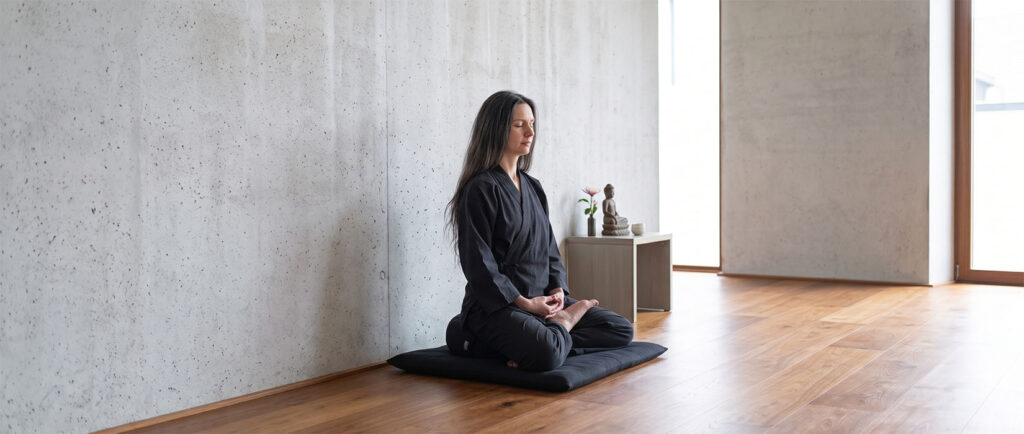
In Zen Buddhism, Zazen simply translates to “seated meditation.” It is not about escaping reality or achieving a state of magical euphoria; it is about grounding yourself exactly where you are.
- How to practice it at home: You do not need an elaborate meditation room. Find a comfortable cushion in a quiet corner of your home. Sit with a straight, unsupported back, lower your gaze, and focus solely on the rhythm of your breath. Even five minutes of this intentional stillness can reset a dysregulated nervous system.
Embracing Wabi-Sabi
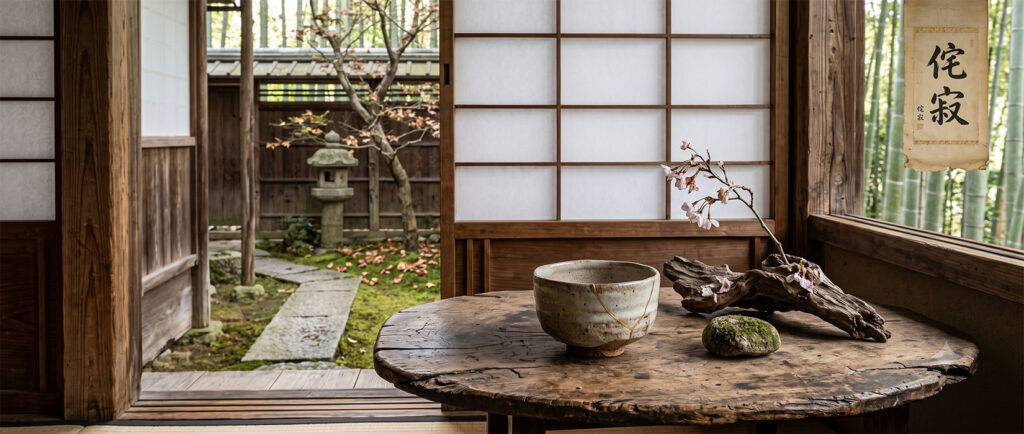
Wabi-Sabi is the Japanese art of finding perfection in the imperfect and accepting the natural cycle of growth and decay.
- The Mindset Shift: Instead of striving for a flawless life, career, or home, Wabi-Sabi teaches us to embrace the cracks. It is the deep exhale that reminds us we do not have to have everything figured out right now. You are a work in progress, and there is profound beauty in that.
From Interior Design to Inner Peace
There is a deep psychological link between our external environment and our internal state. When your mind feels chaotic, look at your space. When your space is cluttered, your mind usually follows.

Mindful Curation (Danshari)
Danshari is the practice that carries mottainai into daily life. It goes beyond simple decluttering.. It is broken down into three parts:
- Dan: Refusing to bring unnecessary things into your life.
- Sha: Disposing of what clutters your physical and mental space.
- Ri: Separating yourself from the desire for material possessions.
By applying Danshari, styling your home becomes an act of mental hygiene. Choosing a few high-quality, meaningful pieces over mass-produced clutter trains your brain to prioritize intention over impulse.
The Grounding Power of Nature
Japandi interiors heavily feature raw wood, stone, bamboo, and linen. This is an intentional nod to the Japanese reverence for nature. Bringing natural textures into your home physically lowers stress hormones and creates a subliminal connection to the earth, reminding a busy mind to slow down.


Daily Japandi Rituals to Ground Your Mind
Translating this philosophy into your daily life doesn’t require a complete lifestyle overhaul. It thrives in the micro-moments.
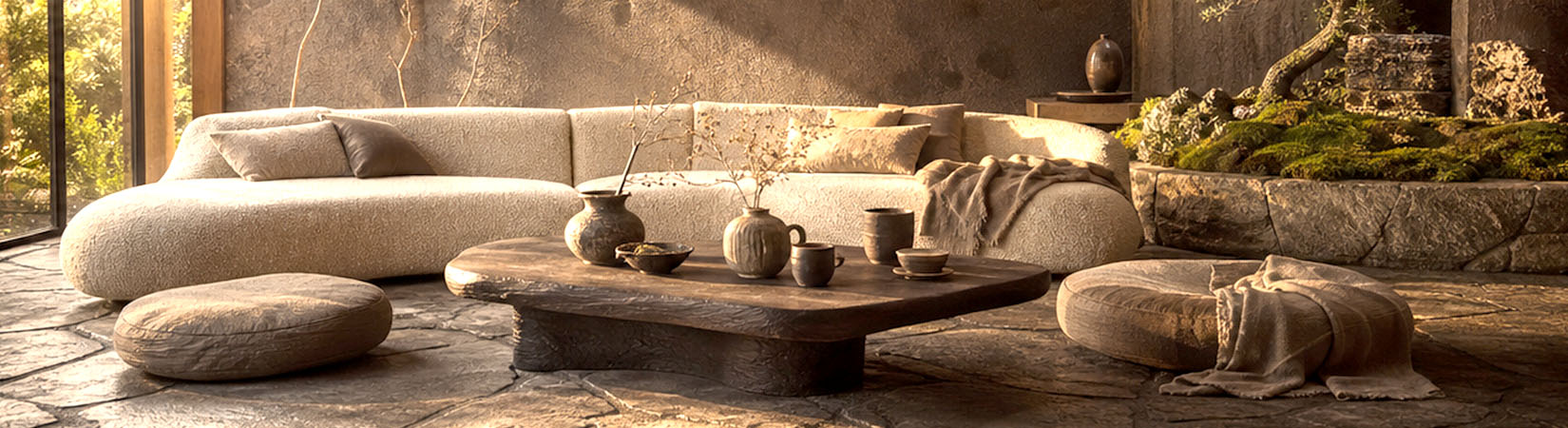
A Gentle Reminder: Your home is not a museum meant to be photographed; it is a sanctuary meant to hold you. When you design for peace rather than perfection, a calm mindset naturally follows.