Materials
Non-Toxic Japandi: Which Certifications Actually Mean Something
CARB Phase 2 compliance has been federal law since 2019, so advertising it means nothing. What TSCA Title VI limits, what GREENGUARD Gold caps, and the practical hierarchy.
Half the certification badges on American furniture listings are meaningful. The other half are legal minimums being sold to you as features, and the most common one is in the second category.
If a listing tells you a cabinet is CARB Phase 2 compliant, it is telling you the product obeys the law. Every composite wood product legally sold in the United States has met those limits since March 2019, when the EPA's TSCA Title VI rule took effect nationwide. That is not a selling point. It is the entry ticket.
What TSCA Title VI actually limits
The rule caps formaldehyde emissions from composite wood panels. The limits, which are the same figures CARB Phase 2 set in California before they went federal:
| Material | Limit |
|---|---|
| Hardwood plywood | 0.05 ppm |
| Particleboard | 0.09 ppm |
| Medium density fibreboard | 0.11 ppm |
| Thin MDF | 0.13 ppm |
Two useful things fall out of that table.
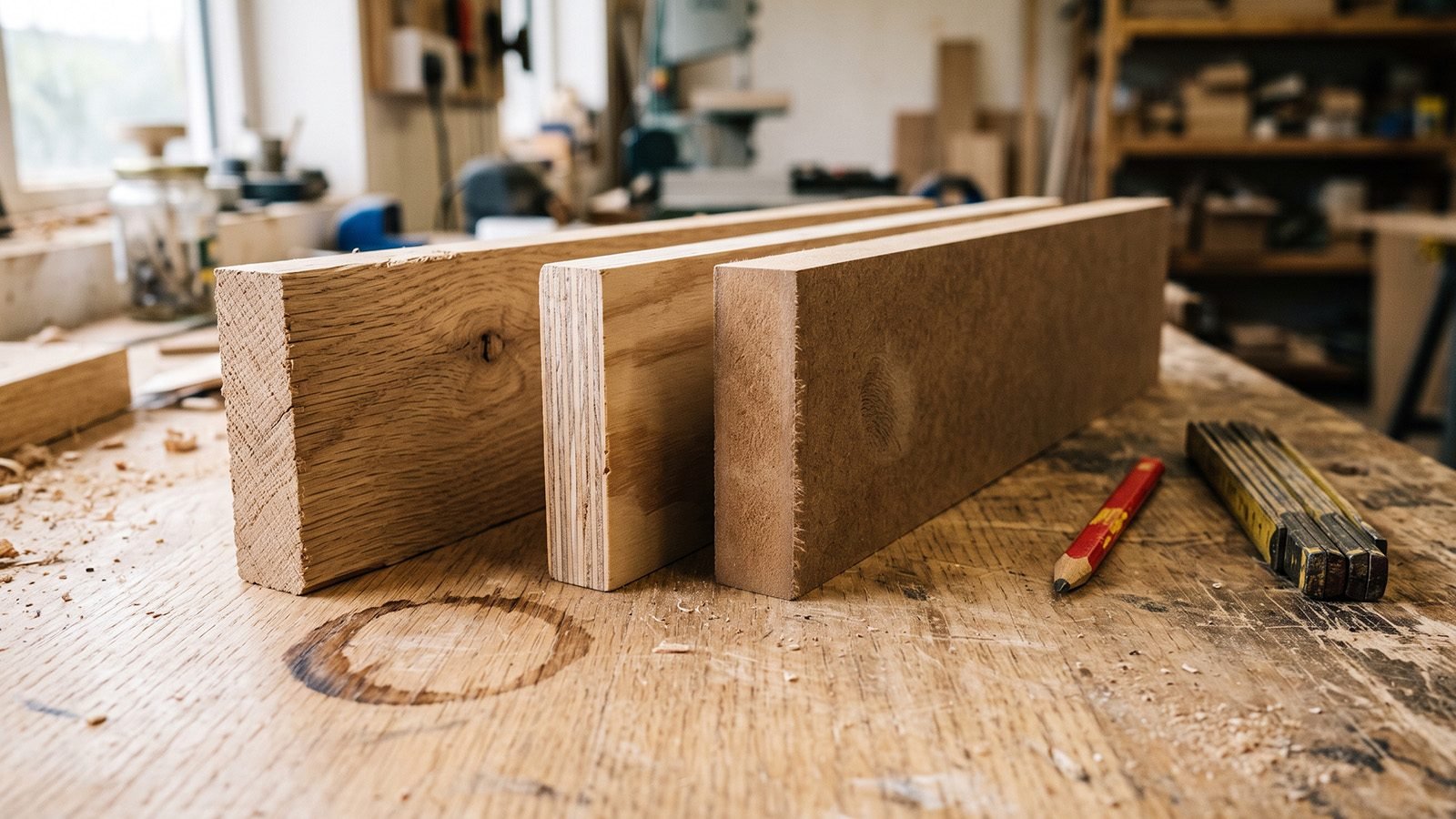
Different materials are held to different standards. MDF is permitted more than twice the emissions of hardwood plywood. If you are choosing between engineered materials, plywood is the lower emission option by regulation, not by marketing.
Compliance is a ceiling, not a target. A product at 0.10 ppm and a product at 0.02 ppm are both compliant MDF. The badge tells you nothing about where in that range a specific item sits.
GREENGUARD, and where the real information is
This is the certification that carries actual signal, and it comes in tiers that matter.
Standard GREENGUARD caps total volatile organic compounds at 500 micrograms per cubic metre.
GREENGUARD Gold caps them at 220, and formaldehyde specifically at 7.3 parts per billion, which is also expressed as 9 micrograms per cubic metre. Gold aligns with California's Section 01350 criteria, which is the standard used for products going into schools and healthcare settings.
GREENGUARD Formaldehyde-Free is a further tier above Gold.
So the practical hierarchy is straightforward: Gold means something, standard GREENGUARD means less, and CARB Phase 2 means the law.
The unit difference between 7.3 ppb and 0.05 ppm trips people up. They measure different things in different ways and are not directly comparable on the page. Treat them as separate systems rather than trying to convert.
Solid wood is not automatically the answer
The intuitive move is to buy solid wood and skip the whole question. It is a good move and it is not complete.
The resin is the issue, not the wood. Emissions from engineered panels come from the adhesive binding the fibres, which is why plywood, particleboard and MDF are regulated and a solid oak plank is not.
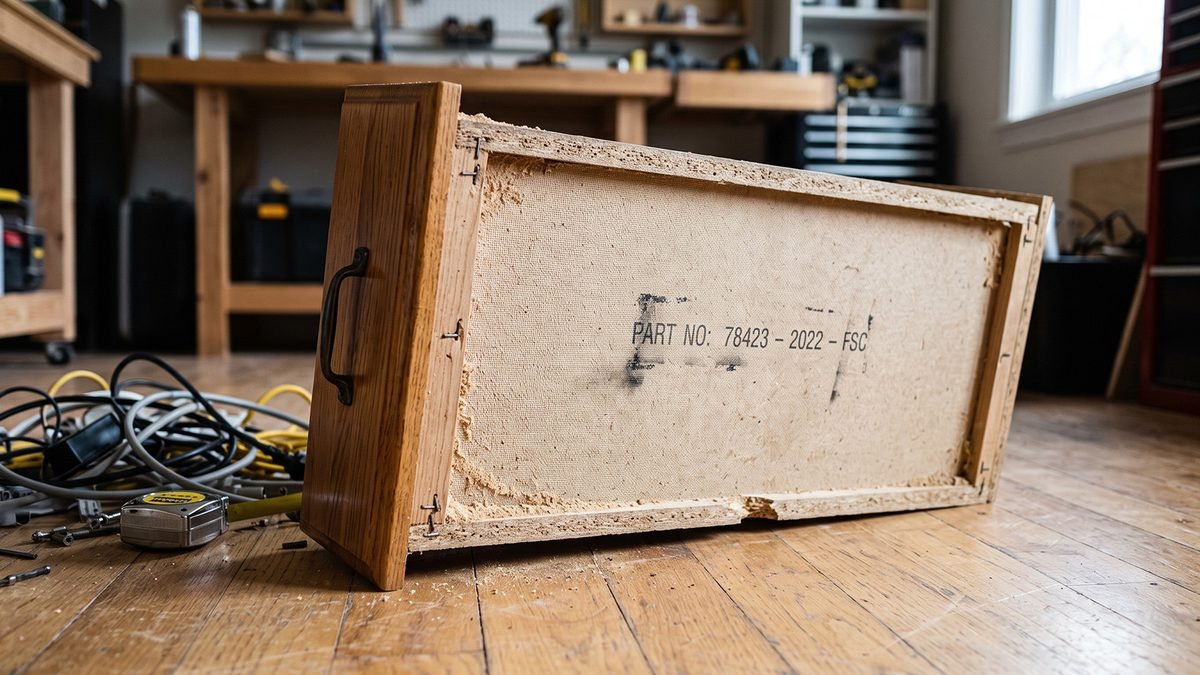
Solid wood furniture usually contains engineered components. Drawer bottoms, cabinet backs, shelf cores. A dresser advertised as solid oak may have MDF everywhere you do not see.
The finish is a separate question entirely. A solid wood piece coated in a high-VOC lacquer is not a low emission object. Finish and substrate are two different decisions and certification schemes treat them differently.
Finishes, briefly and honestly
Hardwax oils are the finish this style points toward, and they have genuine advantages: they penetrate rather than forming a film, they leave the grain open and touchable, and they spot repair rather than requiring a full refinish.
What we will not tell you is that any particular product is safe or unsafe, because that is a per-product question with per-product data and the marketing in this category is heavy. Some hardwax oils are solvent-based. Some are not. The manufacturer's technical data sheet answers it and the product page usually does not.
The same applies to paints and wall finishes. Mineral finishes like limewash and clay are generally low emission by nature, but the pigments and any additives are the variable, and we have not verified specific products.
Textiles
The fabric side has its own certification systems covering restricted substances in the finished textile.
Two practical notes that hold regardless of badge.
Flame retardants are the historic issue in upholstered furniture. Regulations in this area have changed considerably in the last decade and older secondhand upholstery is more likely to carry them than new.
Natural fibre is not automatically low emission. Cotton and linen carry whatever was applied during processing. Undyed and unfinished is a better signal than the fibre type alone.
The practical hierarchy
For someone who is not going to read a technical data sheet, in order.
- Buy fewer things. The lowest emission furniture is the piece you did not buy. This is not evasion, it is genuinely the largest lever.
- Buy secondhand solid wood. Anything that has been in a house for twenty years has finished off-gassing whatever it was going to. This is also the most consistent with the rest of the style.
- Prefer GREENGUARD Gold over unlabelled when buying new engineered pieces.
- Prefer plywood over MDF where the choice exists, on the regulatory numbers above.
- Ask about the finish separately from the substrate.
- Ventilate anything new, aggressively, for the first weeks. Emissions are highest when a product is new and decline over time.
- Ignore CARB Phase 2 as a differentiator. It is the floor.
What we are not claiming
Worth being explicit, because this subject attracts overstatement in both directions.
We are not telling you engineered wood is dangerous in your home. We are telling you what the limits are and which badges distinguish products from one another.
We are also not telling you emissions stop on a fixed timetable. There is published work on long-term off-gassing from urea-formaldehyde panels under heat and humidity, and we have not obtained the primary sources, so we are not going to put a number or a duration on it. Ventilation is sensible regardless.
If a specific product matters to you, the manufacturer's technical documentation is the answer, and a company that cannot produce it has told you something.
The lowest emission thing in any room is the thing you did not buy, which is also the cheapest way to make a room feel finished. The free Japandi Starter Guide covers what genuinely needs adding and in what order. Get the Japandi Starter Guide.