
Materials
Charred Timber: The Grounding Dark That Paint Cannot Fake
Charred timber gives a Japandi room the dark anchor that black paint cannot fake. What yakisugi actually does indoors, the three finish levels, and honest alternatives.
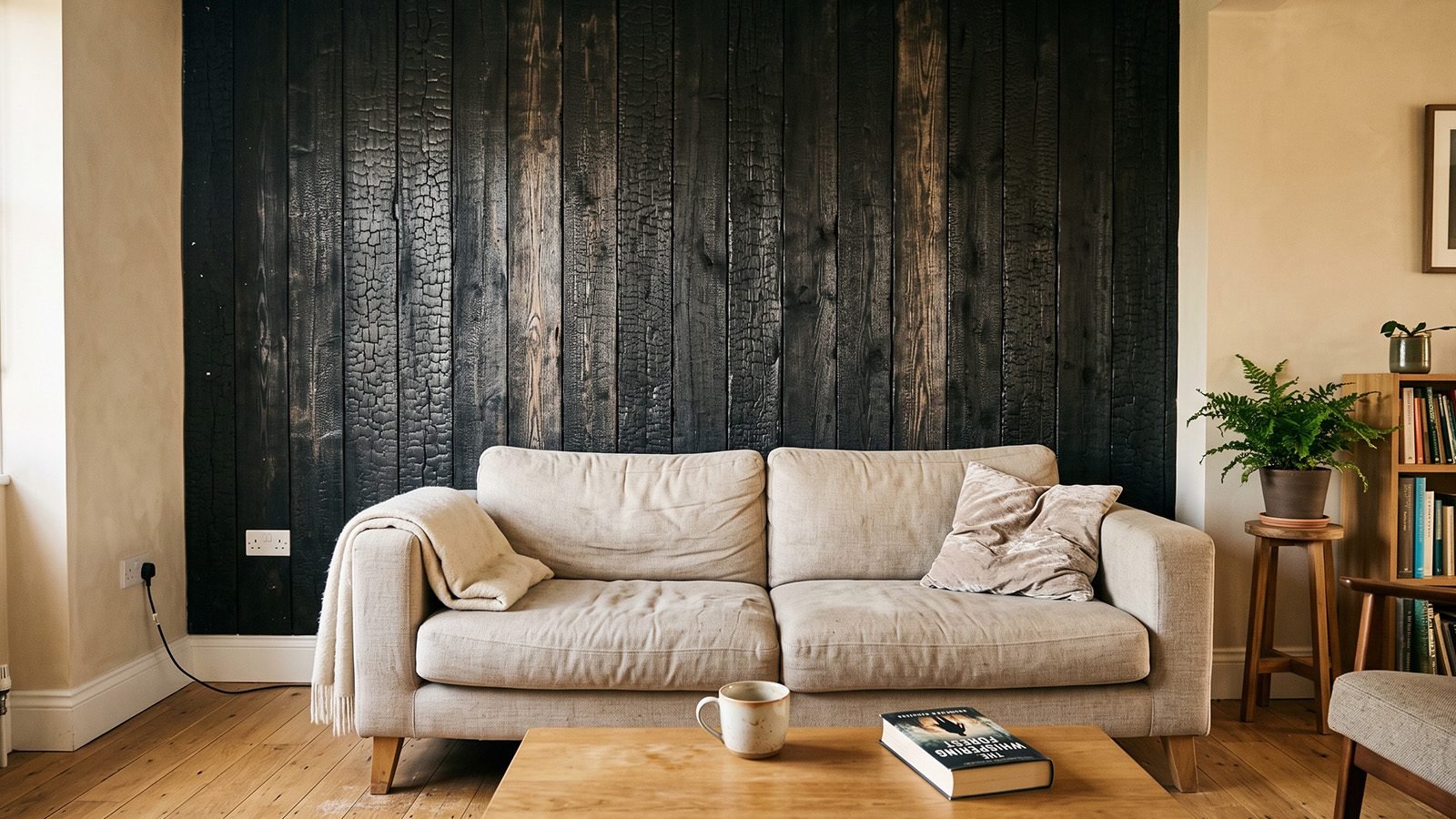
Every Japandi room needs one element carrying real visual weight, and most people reach for black paint. Charred timber does the same job with texture that paint cannot fake, which is exactly why it is worth understanding before you buy the imitation.
Yakisugi, often sold in the US as shou sugi ban, is a Japanese technique of charring the surface of timber. It was developed as exterior weather protection, not as decoration. The carbon layer resists water, insects and rot, which is why boards treated this way have lasted on Japanese buildings for a very long time.
Be clear about what you are buying it for
Indoors, the protective argument is irrelevant. There is no rain, no rot pressure, and no insects worth defending against. Inside a house, charred timber is purely a textural and tonal decision.
That is not a criticism, it is a clarification, because a lot of American marketing sells the heritage story to justify the price on interior products where the heritage function does nothing. Buy it because the surface does something no paint can do, not because of a preservation benefit you will never use.
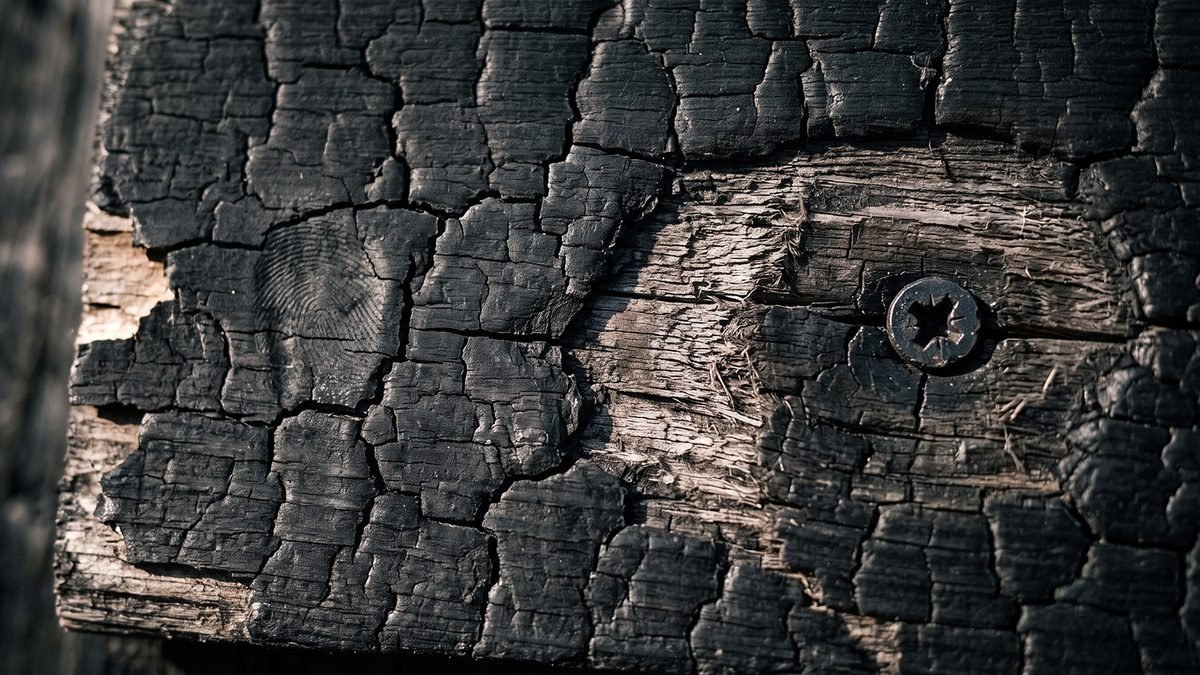
What the surface actually does: light hits a charred board and scatters across an alligator-cracked texture, so the black reads as deep and alive rather than flat. Black paint on smooth wood absorbs light uniformly and reads as a hole in the wall. Under the raking side light that Japandi rooms depend on, that difference is dramatic.
The three finish levels
Suppliers rarely explain this clearly and it determines what you get.
Heavily charred and left raw. Deep alligator cracking, very black, high texture. Also the version most likely to leave carbon on your hand or your sleeve. Not appropriate anywhere people brush past it.
Charred and brushed. The loose carbon is wire brushed off, revealing the grain beneath as a silvered or brown-black pattern. Less dramatic, far more practical, and the version most suited to interiors.
Charred, brushed and oiled or sealed. Stabilised, wipeable, and the only version we would put on a piece of furniture or anywhere within reach. The sealer slightly reduces the matte depth, which is the trade you make.
If a listing does not say which one it is, assume it is the cheapest to produce and ask.
Where it works indoors
One wall, or part of one wall. This is the grounding dark that the whole style calls for. A single charred plane behind a low light oak bed or sofa does the job of anchoring the room and nothing else in the space needs to be dark.
A single furniture piece. A charred bench, a console, a set of open shelves. Often more effective than a wall because it sits in the middle of the room where the eye lands naturally.
Small architectural details. A charred shelf, a windowsill, a stair riser. Cheap, low commitment, and enough to satisfy the rule that your accent should appear in two or three places.
Where it does not work: a whole room, a small room with limited daylight, or a kitchen where it will meet grease. Charred timber absorbs enormous amounts of light. In a north facing room with one small window it stops reading as depth and starts reading as gloom.
The DIY question, answered honestly
You can char timber yourself with a propane torch. Plenty of people do, and cedar takes it best because its resin content produces the characteristic cracking readily.
Two warnings that most tutorials skate over.
It is genuinely a fire operation. Charred boards can retain heat and smoulder internally long after the flame is gone. This is outdoor work, with water on hand, and boards left somewhere non-combustible for hours afterward. People have lost sheds doing this casually.
Consistency is hard. Getting an even char across ten boards so they read as one surface takes practice, and the practice happens on wood you paid for. Doing one small shelf as a first attempt is sensible. Doing a whole feature wall as a first attempt usually is not.
The cheaper alternatives, ranked
If the cost or the effort does not work out, the substitutes are not all equal.
Best: dark stained oak with an open grain and a matte finish. You keep visible wood texture, which is most of what makes charred timber work. A hardwax oil in a deep espresso or near black on rift sawn oak gets you a genuinely good result.
Acceptable: limewash or clay plaster in a deep charcoal. You lose the wood grain but gain the mottled surface movement, which is a different kind of depth. This works particularly well as the grounding element in a bedroom.
Weakest: flat black paint on smooth drywall or MDF. It provides the tonal anchor and nothing else. If this is your budget, put the money into making the surface matte rather than into the colour, because a dead flat black reads far better than an eggshell one.
Avoid: printed woodgrain vinyl and photographic charred timber wallpaper. The texture in these is an image of texture, and under the low raking light this style depends on, the flatness gives it away instantly.
Balancing it in the room
A charred element is strong. Two rules keep it from taking over.
Put something pale directly against it. A cream ceramic vessel on a charred shelf, an oatmeal linen sofa against a charred wall. The contrast is the entire reason to have it, and burying it among mid tones wastes it.
Keep the rest of the room light. One grounding dark, repeated in two or three small touches maximum. If you have a charred wall, you do not also need a walnut floor, a black metal frame collection and a charcoal rug. That combination is not Japandi, it is a different, heavier style.
The test is simple. Stand in the doorway and squint. You should see one dark mass and a lot of light. If you see dark scattered evenly through the room, the anchor has stopped being an anchor.
One dark element, deliberately placed, with everything else kept light. That is the same rule The Dark Layer is built on: nine assets around a single anchor colour, wall art and guides for rooms that need weight without going heavy. See The Dark Layer.