These four terms get used as synonyms in most American design writing and they are not even the same category of thing. Two are interior styles, one is a design movement, and one is a philosophical stance about impermanence.
The practical consequence of confusing them is buying for the wrong one. People execute Scandinavian and wonder why it does not feel contemplative, or chase wabi-sabi by buying distressed furniture, which is the exact inversion of the idea.
Scandinavian
What it is: a design tradition from the Nordic countries built on daylight scarcity, functionality and affordability.
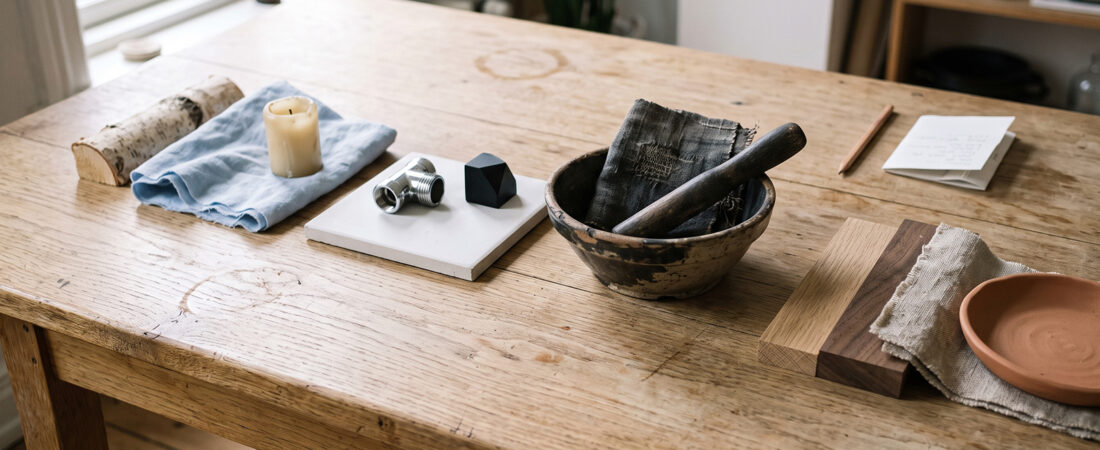
What it looks like: bright white walls, pale ash and birch, soft pastel accents, cosy textiles, plenty of candles. Furniture is often mid-height with tapered legs. Colour is permitted, especially soft blues and dusty pinks.
The feeling: warmth and comfort. Hygge is the operative concept and it is fundamentally about being cosy indoors while it is unpleasant outside.
The tell: if the room feels like a hug, it is Scandinavian.
Minimalism
What it is: a reductive movement rather than a national style. Its rule is subtraction as an end in itself.
What it looks like: hard white, concrete, glass, chrome, black. Very few objects. Strong geometry. Often cool in temperature and unapologetically so.
The feeling: clarity and control. It can be extraordinarily beautiful and it is not trying to be comfortable.
The tell: if the room would look wrong with a crumpled throw on the sofa, it is minimalism.
Wabi-sabi
What it is: not a look. A worldview from Japanese aesthetic and Zen tradition, built on impermanence, incompleteness and the beauty of what has aged.
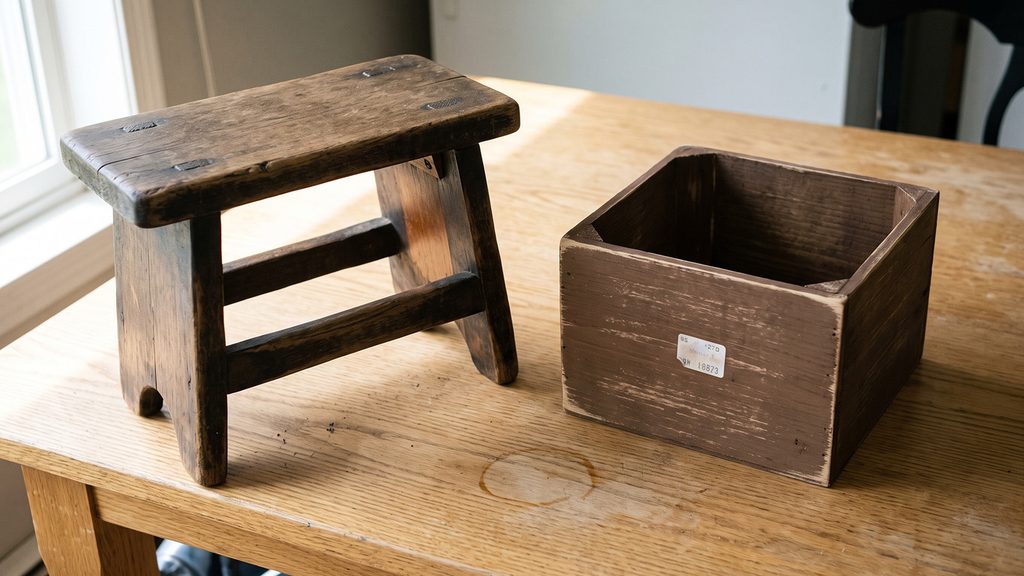
What it looks like: it does not have a fixed appearance, which is precisely the difficulty. A genuinely wabi-sabi object is one that has been used, worn, repaired or aged. It cannot be manufactured into existence.
The feeling: acceptance. Things pass, nothing is finished, and that is not a problem to solve.
The tell: if the room contains objects with real history rather than objects that reference history, it is closer to wabi-sabi.
The common error: buying factory-distressed furniture and believing this counts. Manufactured wear applied evenly across two thousand identical units is the opposite of what the idea means.
Japandi
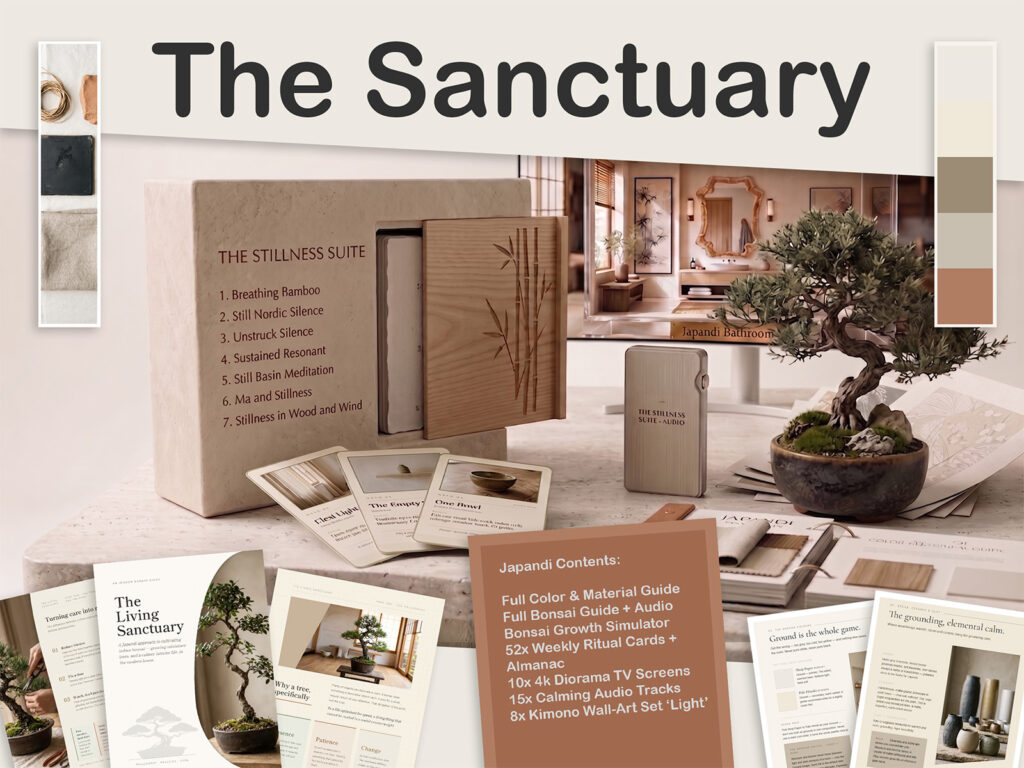
What it is: a hybrid interior style combining Japanese restraint with Scandinavian functional warmth. Codified, recent, and executable.
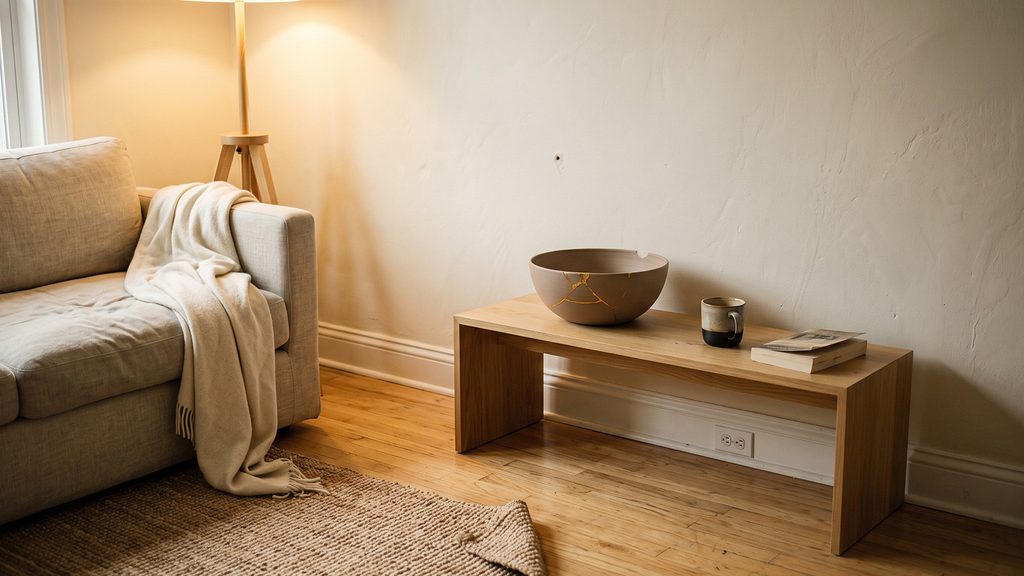
What it looks like: warm neutrals rather than white, light oak with one grounding dark, low furniture, natural textiles, unglazed ceramics, deliberate empty space, warm low lighting.
The feeling: a deep breath. Where Scandinavian is warmth, Japandi is restraint with warmth underneath it.
The tell: if the furniture is low, the palette is warm and there is a bare wall on purpose, it is Japandi.
The comparison, directly
| Scandinavian | Minimalism | Wabi-sabi | Japandi | |
|---|---|---|---|---|
| Category | National style | Movement | Worldview | Hybrid style |
| Palette | Bright white, pastels | Hard white, grey, black | No fixed palette | Warm neutrals, one dark |
| Wood | Pale ash, birch | Often none | Aged, whatever it is | Light oak plus walnut |
| Furniture height | Mid | Varies, often low | Not specified | Deliberately low |
| Tolerance for wear | Moderate | Low | It is the point | High |
| Empty space | Some | A lot | Not the concern | Structural, called ma |
| Can you buy it? | Yes | Yes | No | Yes |
| Cost of entry | Moderate | High | Time, not money | Moderate |
The row that matters most is the last but one. Three of these can be purchased. One cannot, and the entire market for wabi-sabi products exists because that is inconvenient.
Which one are you already
A diagnostic rather than a recommendation. Look at what you own.
Do you have colour you like? Scandinavian. Japandi will feel restrictive and you will end up fighting it.
Does clutter genuinely distress you rather than mildly annoy you? Minimalism. Japandi’s tolerance for a crumpled throw and a visible repair may read as untidy to you.
Do you keep things because of who gave them to you, and do you like objects better once they are worn? You already think in wabi-sabi. What you need is a structure to hold it, which is what Japandi provides.
Do you want calm but find pure minimalism cold? That gap is the exact space Japandi occupies, and it is why the style exists at all.
They combine, in one direction
Worth stating clearly because it resolves most of the confusion.
Japandi is a structure. Wabi-sabi is a stance you can hold inside it. You can execute a Japandi room this month and let it become wabi-sabi over ten years by using it, repairing it and leaving the marks.
The reverse does not work. You cannot buy wabi-sabi and expect a coherent room to result, because it does not specify proportions, palette or anything else that makes a space hold together.
That is the practical hierarchy: use the style to get the structure right, then let time do the part shopping cannot.
The one-sentence versions
Scandinavian: bright, cosy, colour-tolerant, built for long winters.
Minimalism: reduction as the goal, cool, unforgiving, beautiful when done properly.
Wabi-sabi: a way of seeing objects, not a way of buying them.
Japandi: warm restraint with the furniture kept low and one wall left empty.
If the diagnostic landed on Japandi, the fastest way to make a room read as deliberate rather than sparse is to settle the wall before the furniture.