More Than Just a Pinterest Board
The Soul of Japandi
The curated feeds are easy to admire. Strip away the styling, and what remains is not a trend. So much more than a design trend. Japandi is a deeply rooted lifestyle philosophy. It is a conversation more than 170 years old, between Japan and Scandinavia, about how to live better – not just decorate better.
It isn’t about what your space looks like; it’s about how it feels. It is a considered relationship with the space you live in – a mindset that prioritizes mental well-being, ditching the clutter, and finding pure joy in the everyday.
Here is the history, and the reasoning, behind the calm.
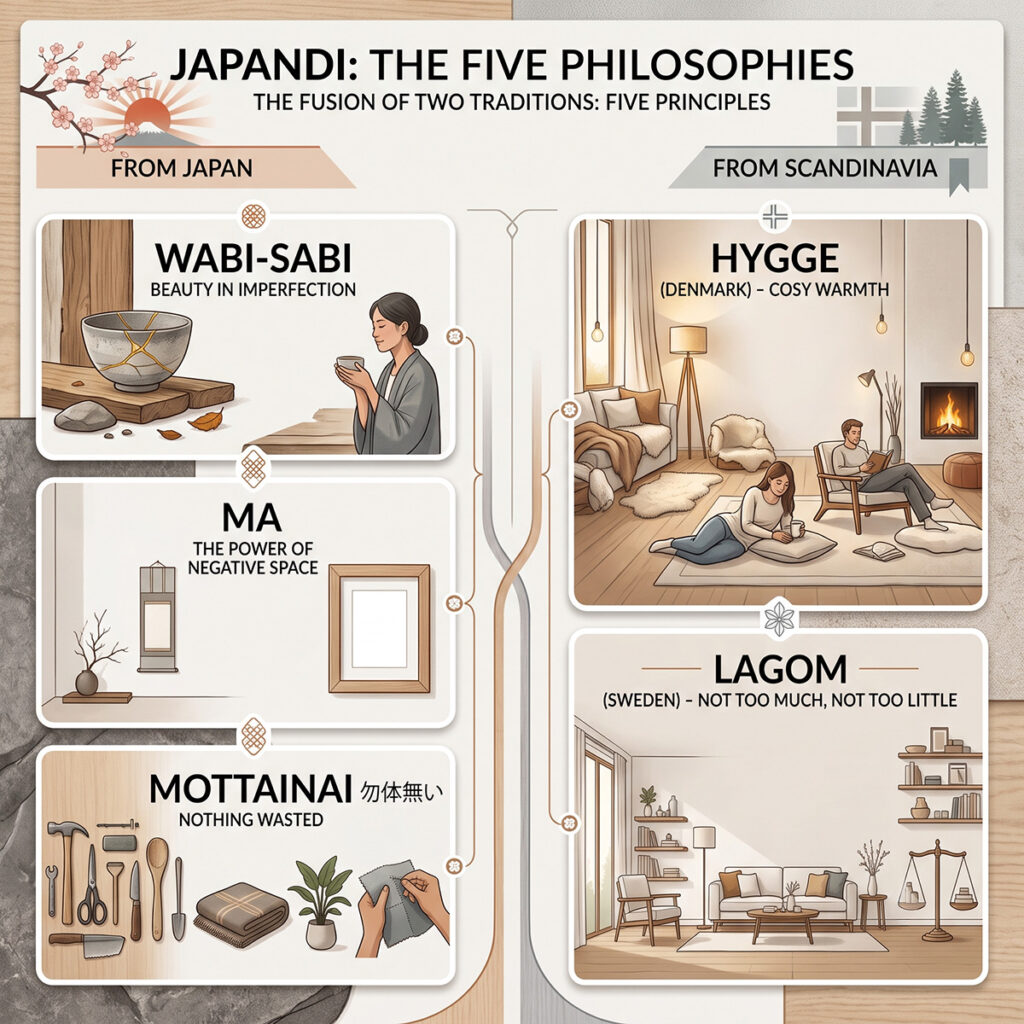
Five principles: three Japanese, two Scandinavian
Japandi is not one philosophy but two traditions that arrived at the same conclusion by different routes. Three ideas come from Japan. Two come from Scandinavia. Together they describe a way of living, not a way of decorating.
From Japan
- Wabi-Sabi: Beauty in imperfection. Peace in the cracked, the worn, the uneven. It ends the exhausting pursuit of a flawless life.
- Ma: The power of negative space. What you leave out matters as much as what you keep. The pause is part of the composition.
- Mottainai: Nothing wasted. Buy less, choose well, keep longer. Sustainability as aesthetic, not as apology.
From Scandinavia
- Hygge: (Denmark) – cosy warmth. Not a candle, but a deliberate act of building somewhere you feel safe enough to stop.
- Lagom: (Sweden) — not too much, not too little. Enough is a decision. It keeps a room from turning sterile, and stops it before it turns crowded.
A conversation more than 170 years old
The name is recent. The relationship is no. This relationship goes way back to 1853. When Japan opened its borders after more than two centuries of near-total isolation, Scandinavian creatives were some of the first to visit. They recognized something familiar.
They found a culture that shared their absolute biggest values: a profound respect for nature, a need for highly functional living, and a deep appreciation for things made by hand. For the next century, the exchange ran in both directions. Japanese creatives traveled north to study Scandinavian comfort, and Nordic designers obsessed over Japanese spatial philosophy. The affinity long predates the label.
The Pivot
From Beautiful Homes to a Beautiful Mind
The part most often left out: you cannot buy your way into it.
When the world collectively burnt out a few years ago, the appetite was not for better-looking rooms, but for somewhere to stop. We realized that a messy environment equals a messy mind. But you can’t just buy a light-oak chair and expect your anxiety to disappear.
To truly get the Japandi vibe, the transformation has to happen in your head first. When you shift your mindset, your physical space naturally follows.
What actually changes
Above all else, Japandi is about the quality of your attention. It’s the quiet moments in the morning, the ease of moving through your day without fighting through mental clutter, and the exhale that arrives once the noise stops.
Fierce Intentionality
This mindset begs you to stop mindless scrolling and impulse buying. It asks one simple question: Does this actually serve a purpose, or does it bring me genuine comfort? If the answer is no, protect your peace and let it go.
Protecting Your Headspace
By intentionally quieting the noise in our lives (both physical and mental) we actively lower our cortisol levels, shake off the day’s stress, and give our brains a much-needed break.
Ready to Actually Live the Vibe?
If you are ready to move past collecting images of rooms and start building a beautifully quiet mind, the journey starts from within. It is time to master the art of intentional living, clear your mental clutter, and create that deep, soul-warming peace for yourself.
Start your own Japandi home here with these Interior and Life improving Digital Downloads!
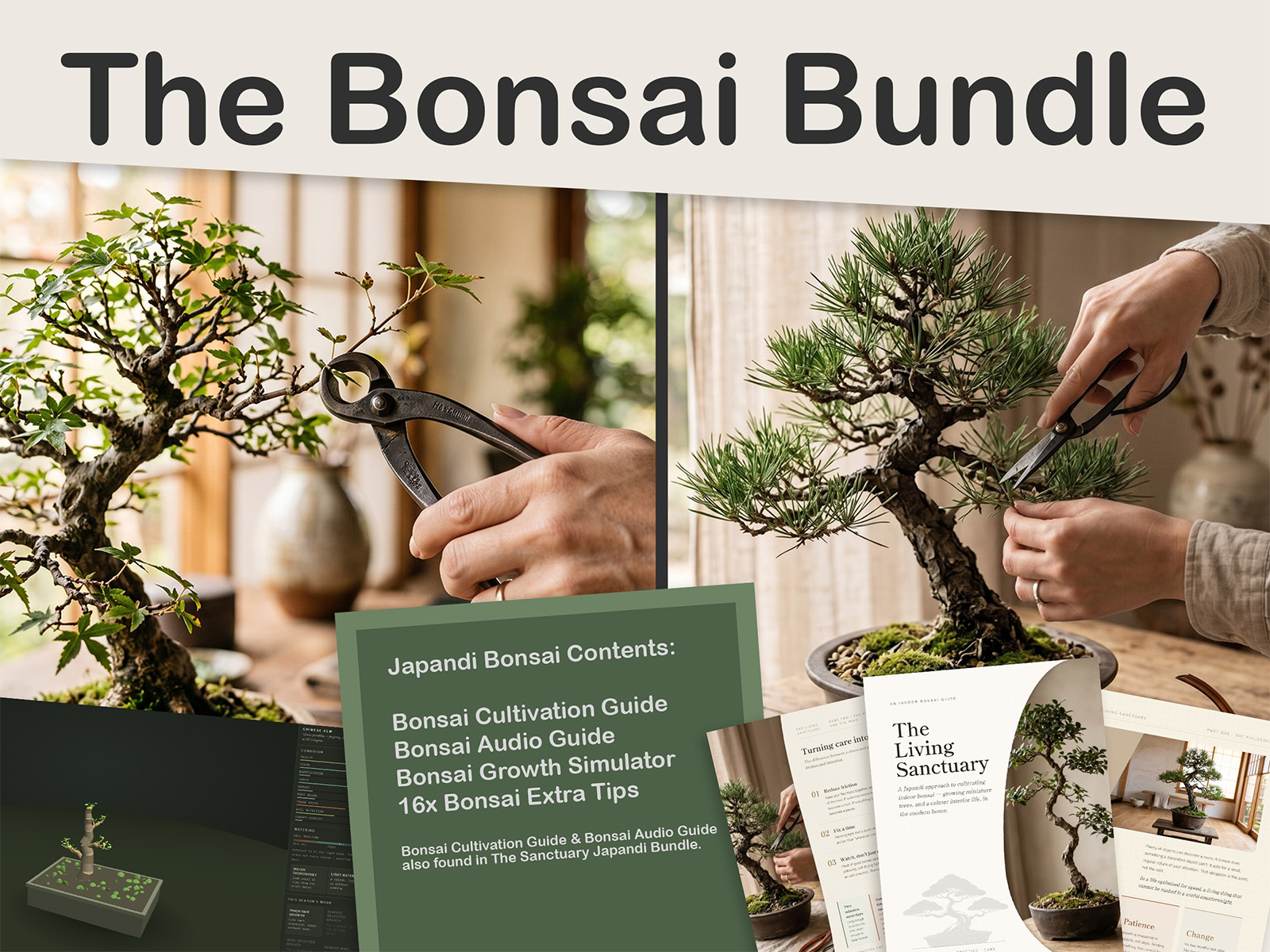
Special Bonsai care, corrected.
A guide, a growth simulator, and sixteen tips for keeping a tree alive – not by accident. Mottainai applied to something that can actually die if you get it wrong.
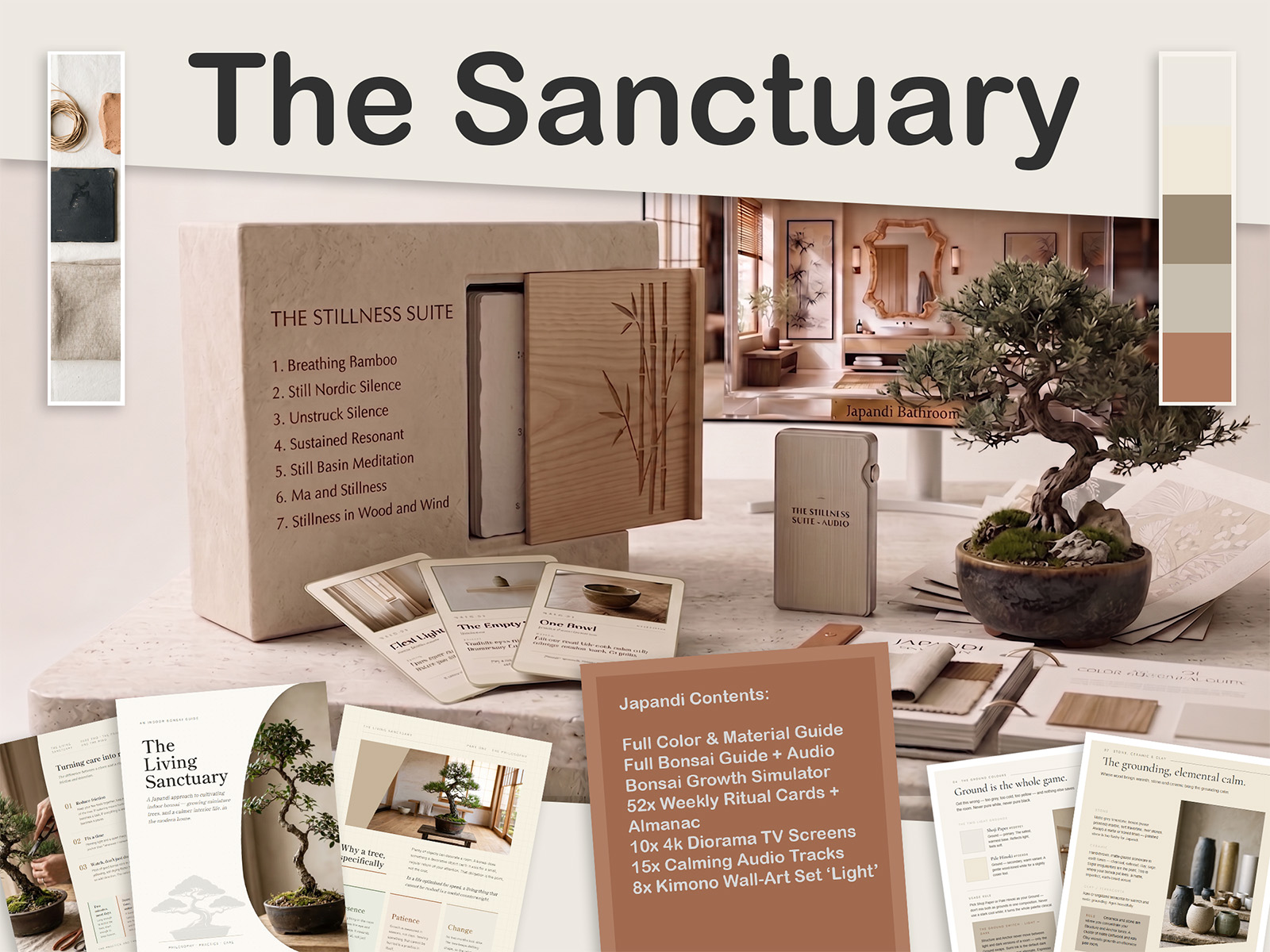
Everything a quiet room needs.
Eight pieces for building a home around wabi-sabi and ma — imperfection kept, empty space respected. Wall art, guides, and two audio companions.
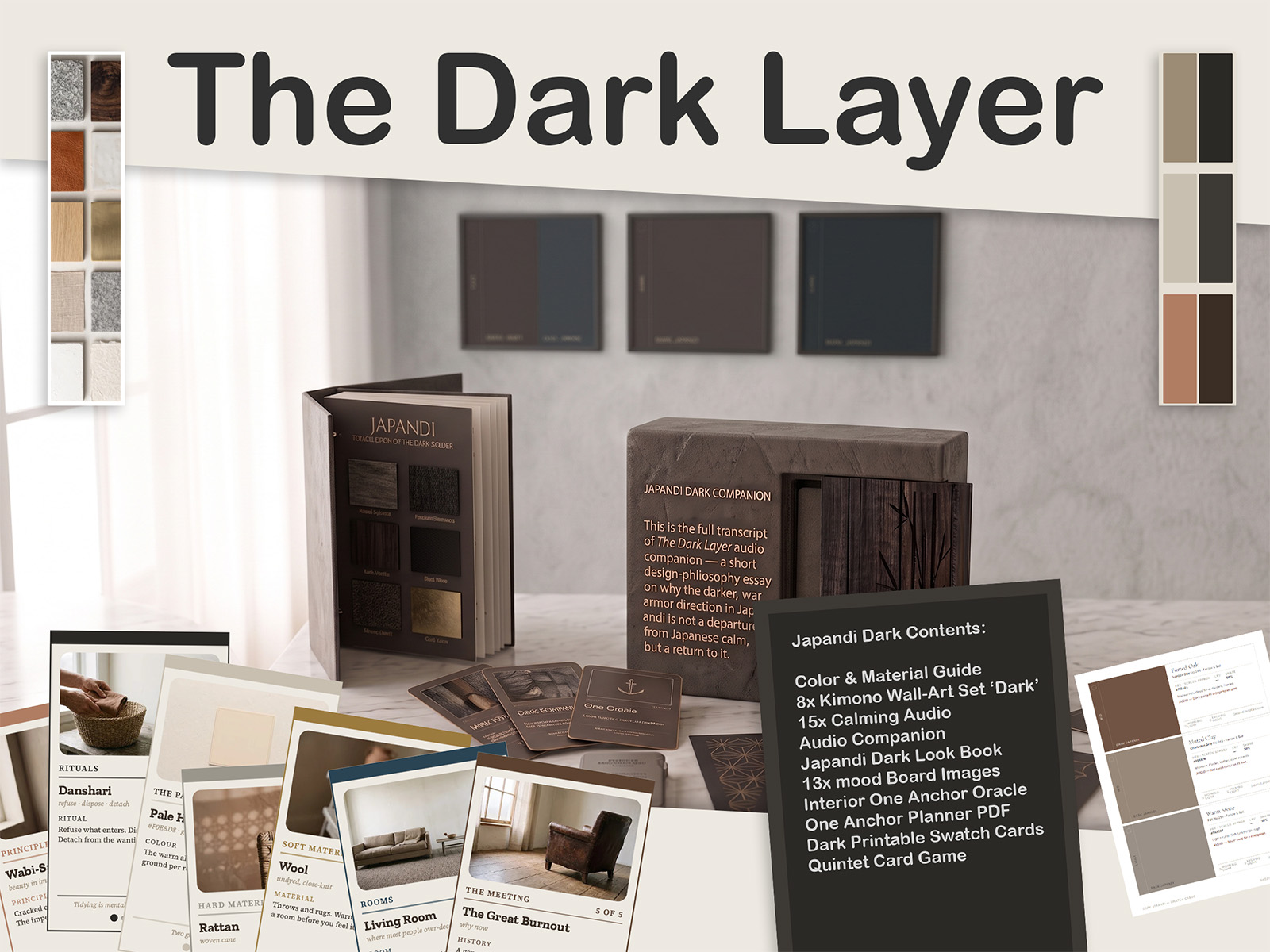
The room after the lights go down.
Nine assets for a home that holds its shape in shadow — one anchor colour, deliberately placed, everything else in ma. Guides, an audio companion, and more.
One complete system. Every asset.
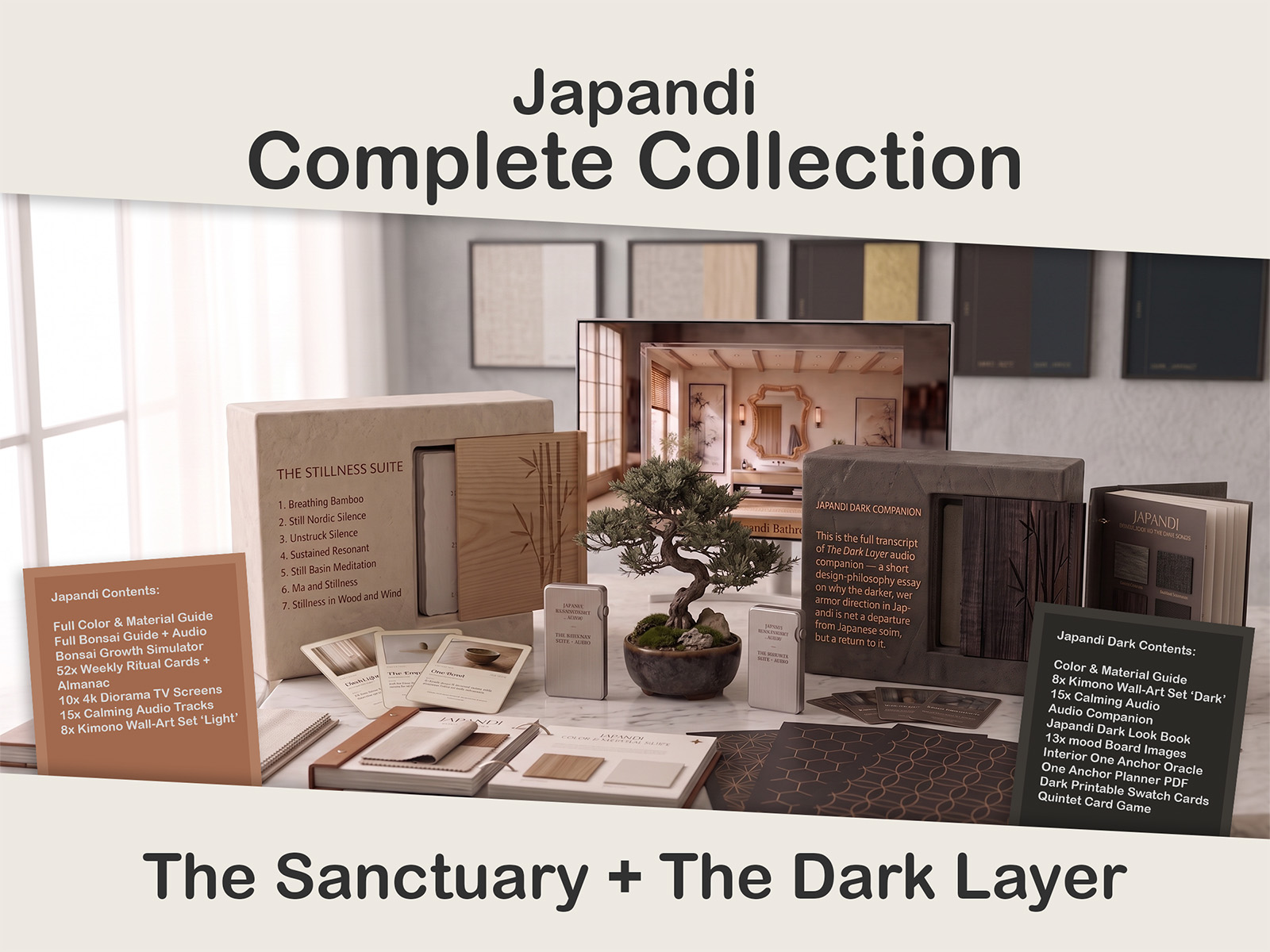
The Sanctuary and The Layer, together – All the 17 assets built on the same three constants that never move between them. Driftwood, Wabi Ash, Kiln Clay.
Subscribe and get the Free Japandi Starter Guide