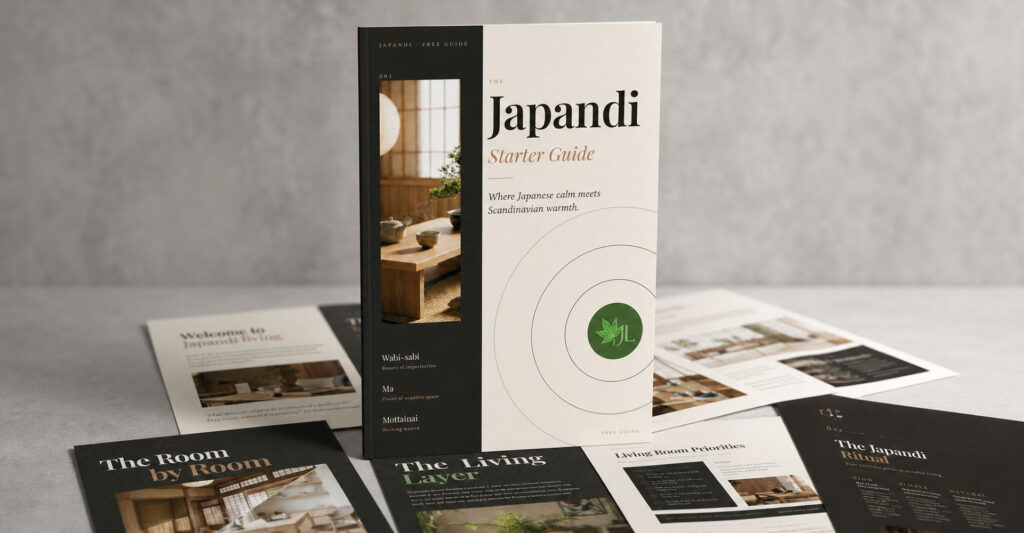
– Room by room –
Calm Japandi living in every space
Every space, one intention
A Japandi home is not decorated room by room – it is felt room by room. Each space has its own rhythm, its own function, its own relationship with light and stillness. What unites them is intention.
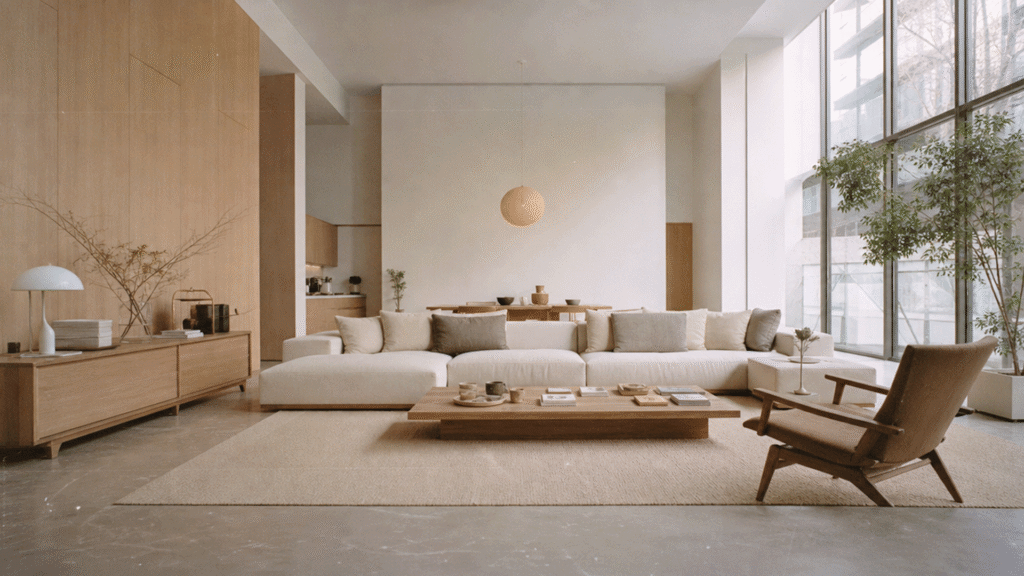
— Where stillness becomes a design choice —
The Japandi Living room
The living room is where most people start – and where most people over-decorate. Too many cushions. Too many candles. Too many things that individually seem harmless but together create noise.
The Japandi living room does the opposite. It starts with subtraction.
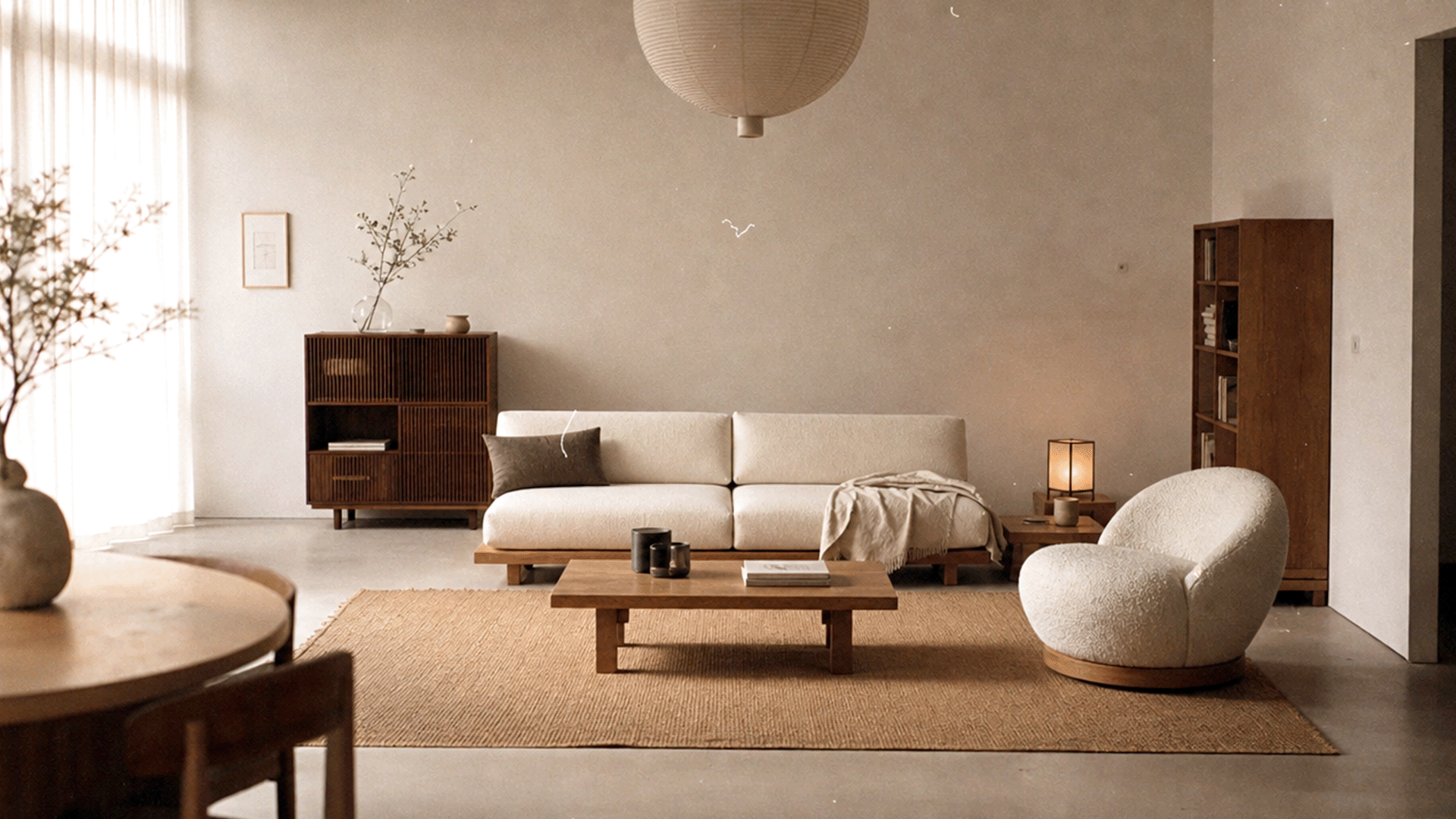
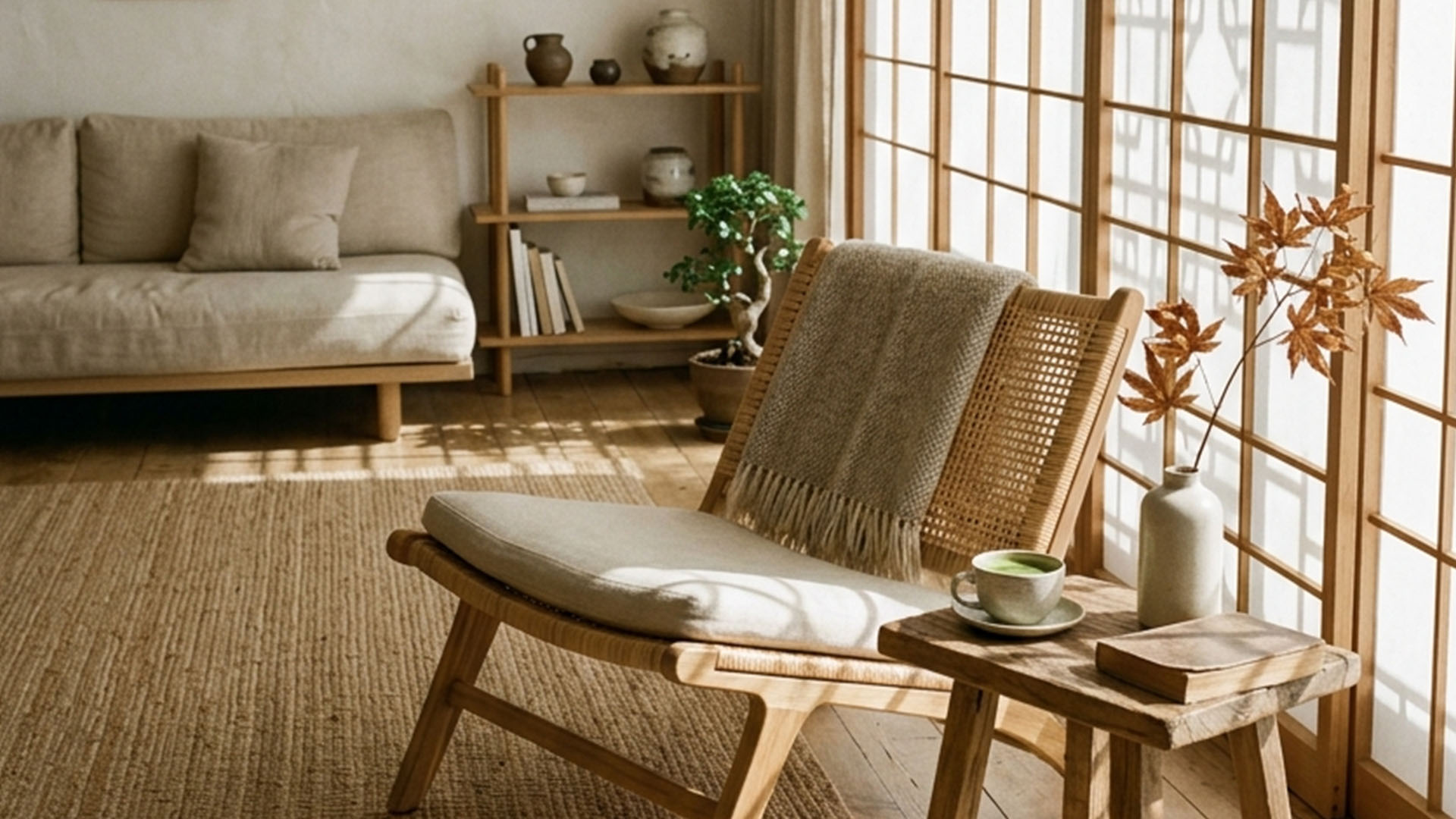
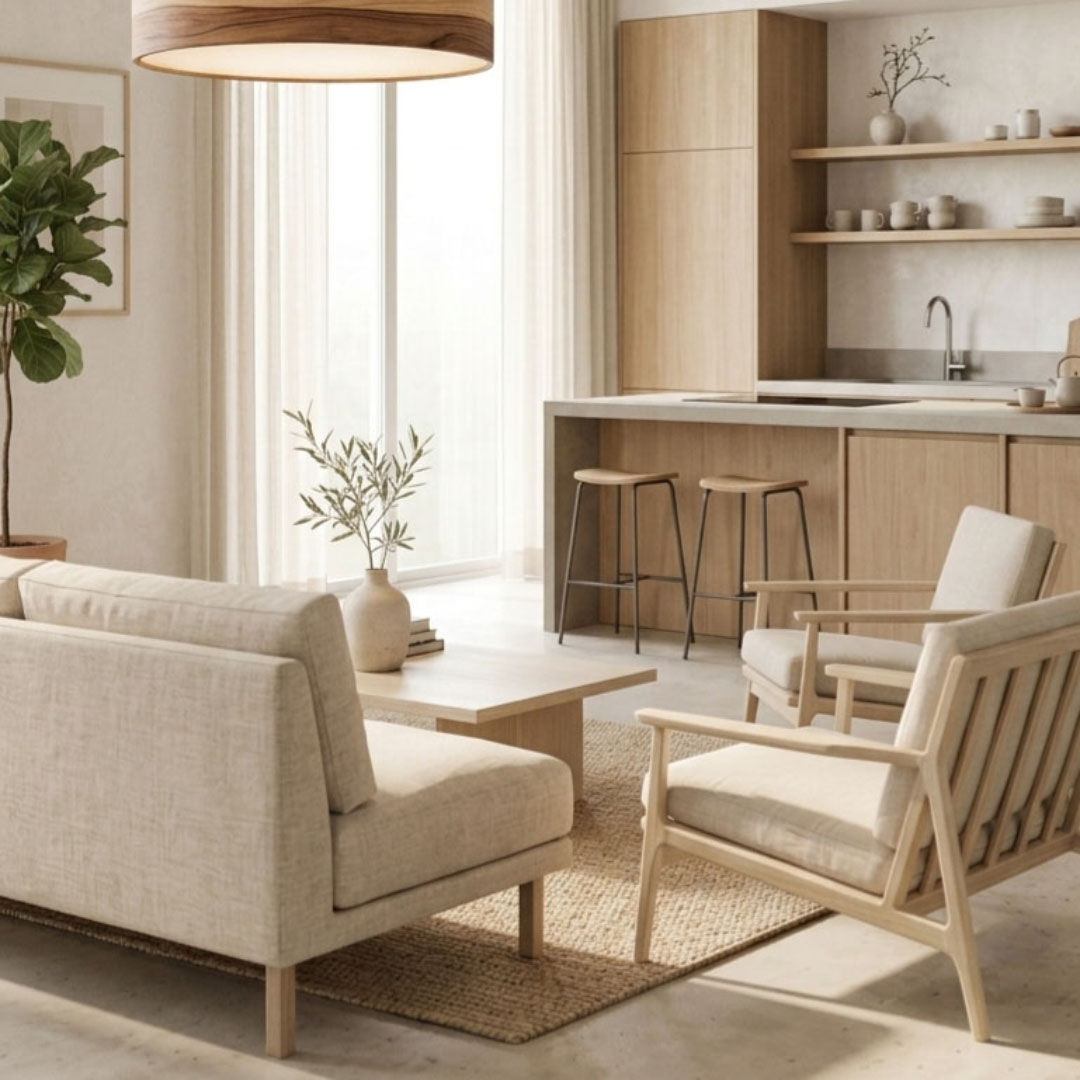
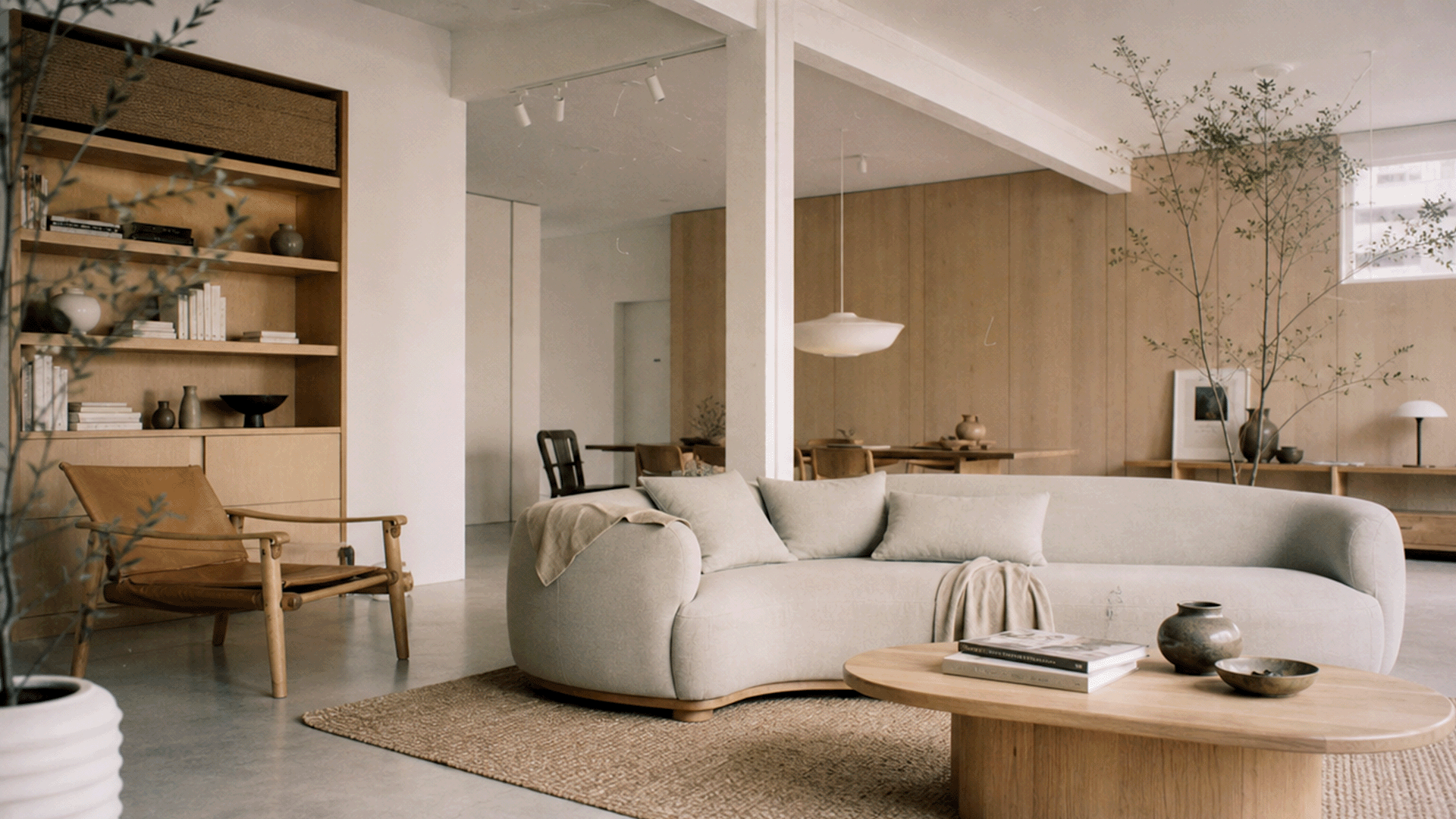
— Living room examples —
The four rules
01 – Low profile everything
Japandi furniture sits close to the floor. A low sofa, a low coffee table, floor cushions where a second chair might go. This single decision makes ceilings feel taller and the entire room feel calmer. It is not about minimalism for its own sake – it is about visual weight.
02 – One statement piece only
One object earns the attention. A single ceramic lamp, one low bench, one framed piece — and everything else steps back. The moment a second object competes for the eye, both lose. Choose the piece with the most character, then keep the rest of the room quiet enough to hold it.
03 – Negative space is furniture
The empty wall. The bare corner. The uncovered section of floor. These are not gaps to fill – they are part of the design. Resist the urge to decorate every surface. The pause between objects is what makes the objects themselves visible.
04 – Layer textures, not patterns
A linen sofa, a jute rug, a wool throw, a ceramic vase. Four different textures, zero patterns. This is how Japandi creates depth and warmth without visual noise.
— Discover the perfect harmony —
The Japandi Bedroom
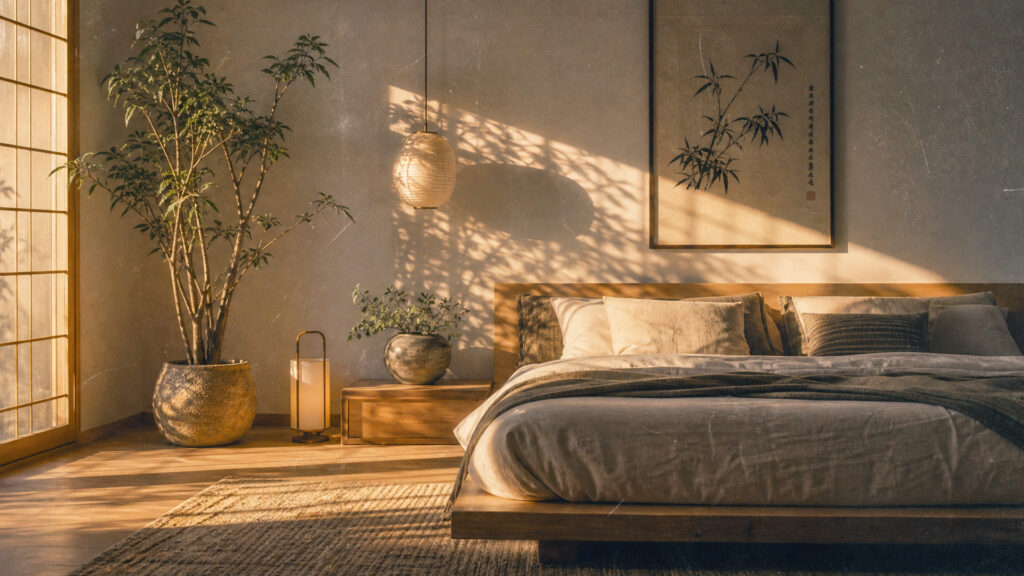
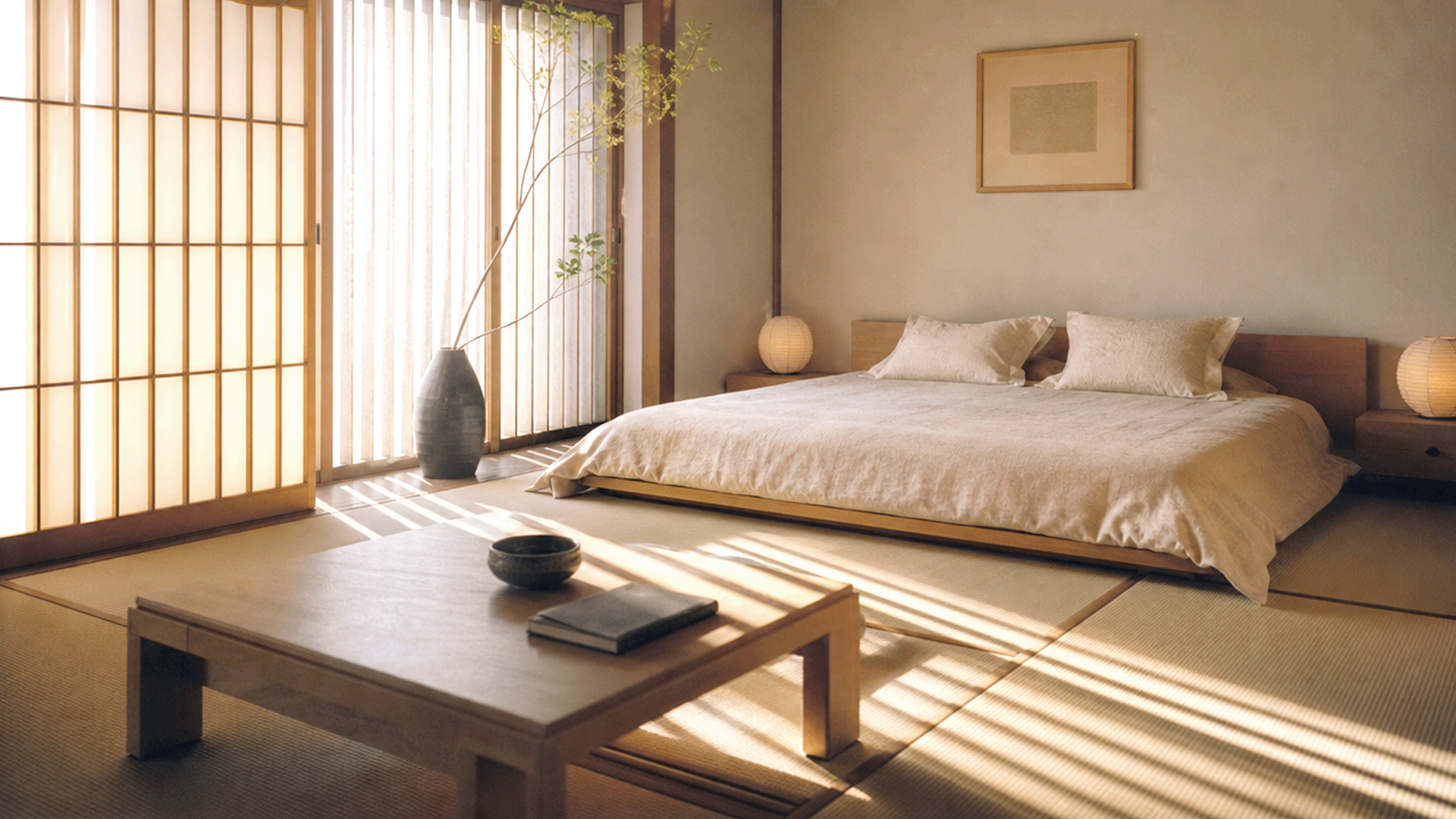
Low-profile platform beds and clean-lined furniture maximize your sense of space, bringing an airy, uncluttered feel to the room.
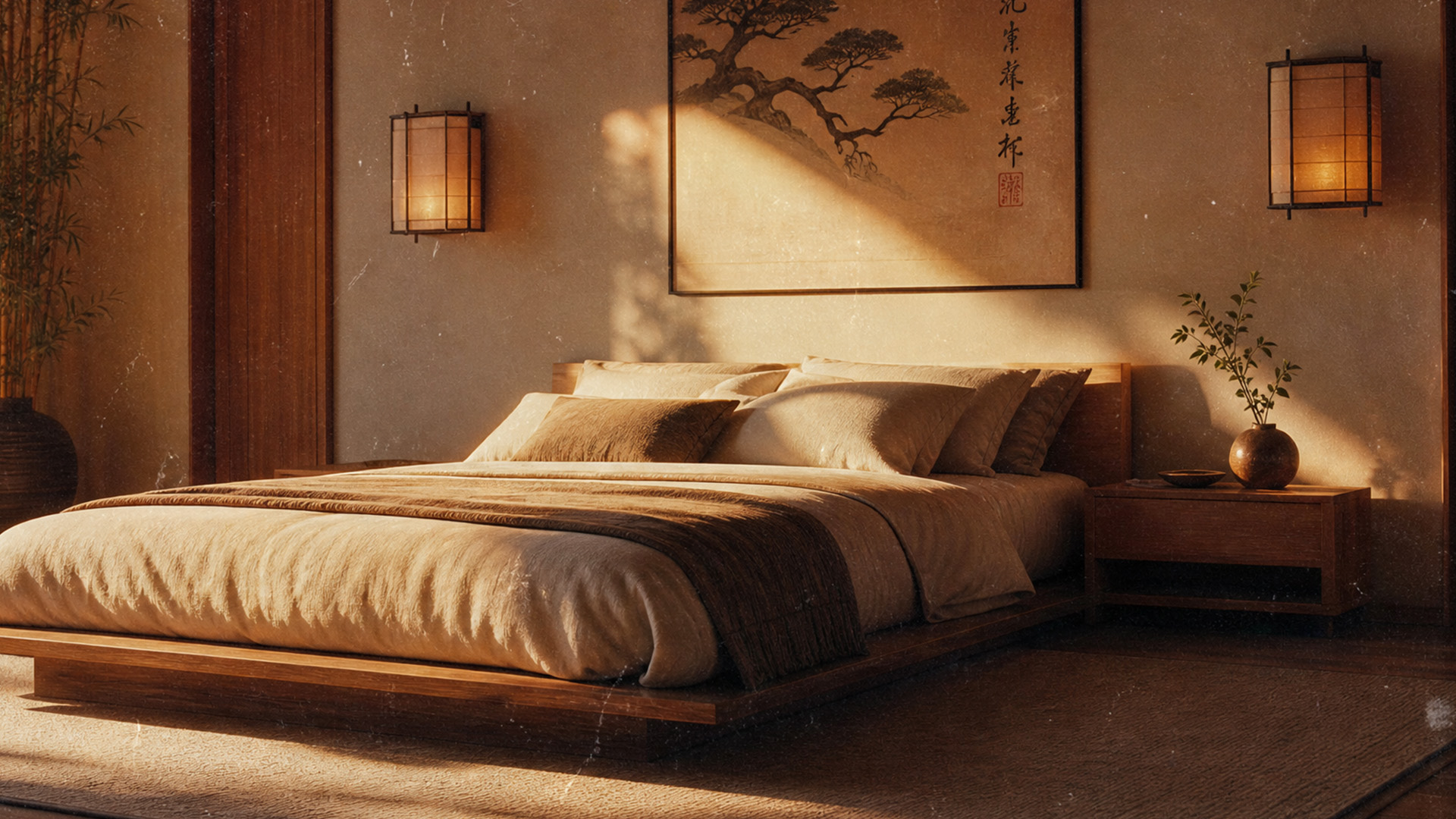
Soft, diffused lighting replicates the gentle glow of natural sunlight, cultivating a warm and intentionally inviting atmosphere.
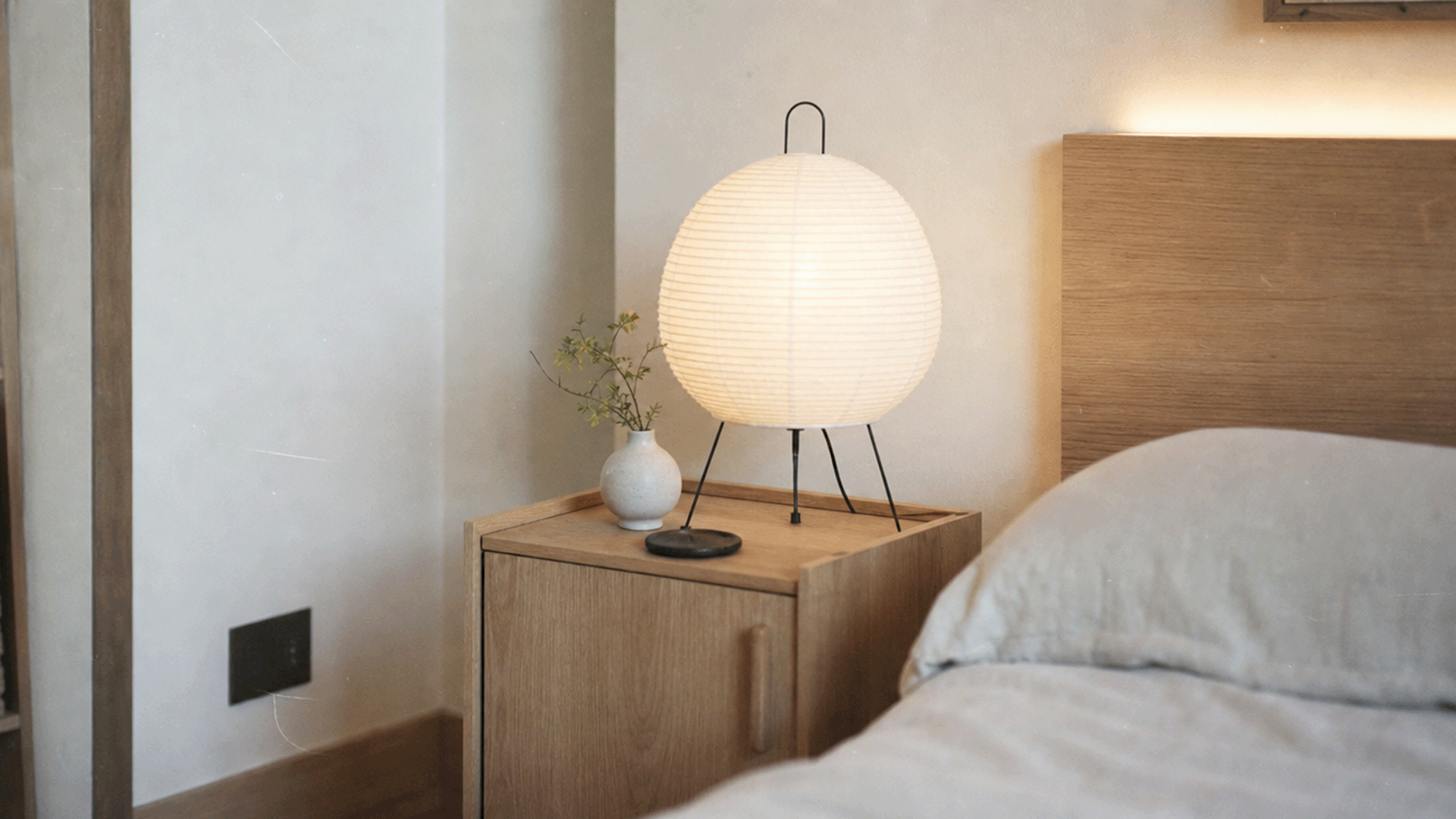
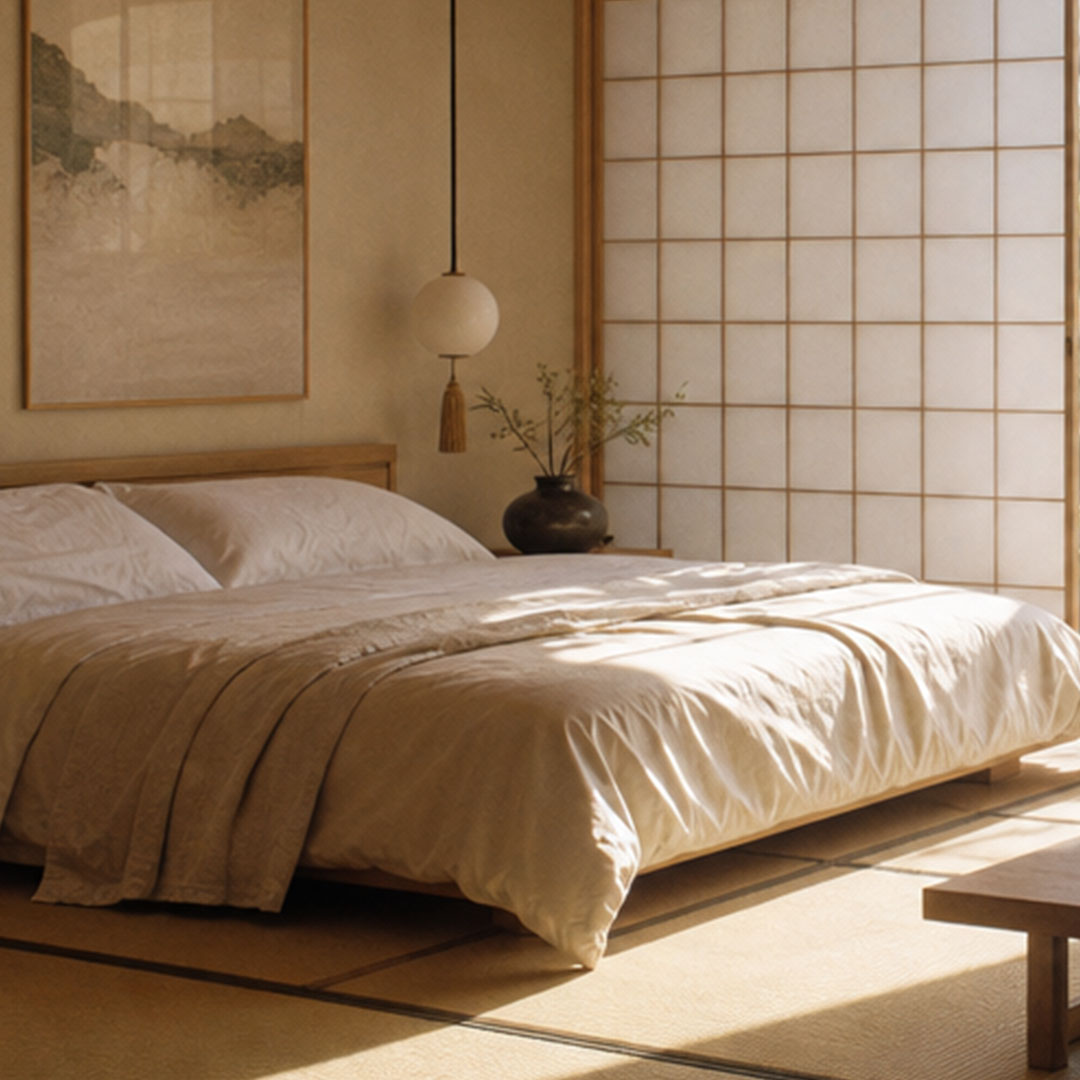
— Bedroom examples —
The four rules
01 – Unfinished, organic textures
A Japandi bedroom relies on the contrast between clean architectural lines and raw materiality. Incorporating elements like light oak bed frames, breathable linen sheets, or the subtle woven texture of a tatami mat grounds the space in nature, adding essential warmth without creating visual clutter.
02 – The muted earth palette
Steer clear of stark, clinical whites and cold, high-contrast colors. Instead, layer warm neutrals, soft stones, and muted clay tones across your walls and bedding. This creates an enveloping, restorative backdrop that catches the morning light beautifully while maintaining a strict, minimalist edge.
03 – Diffused, ambient illumination
Harsh, direct lighting disrupts the tranquil and restorative nature of the space. Rely on soft, indirect light sources like traditional paper lanterns, concealed warm lighting behind a headboard, or low-wattage ceramic lamps to replicate a calming, twilight glow that naturally prepares the mind for rest.
04 – Intentional imperfection
While surfaces and nightstands should remain deliberately clear of everyday clutter, the room should never feel sterile or empty. Introduce the concept of wabi-sabi through a single handcrafted clay vase, an asymmetrical dried branch, or a slightly textured wall finish to celebrate natural flaws and artisanal craftsmanship.
Start your own Japandi home here with these Interior and Life improving Digital Downloads!
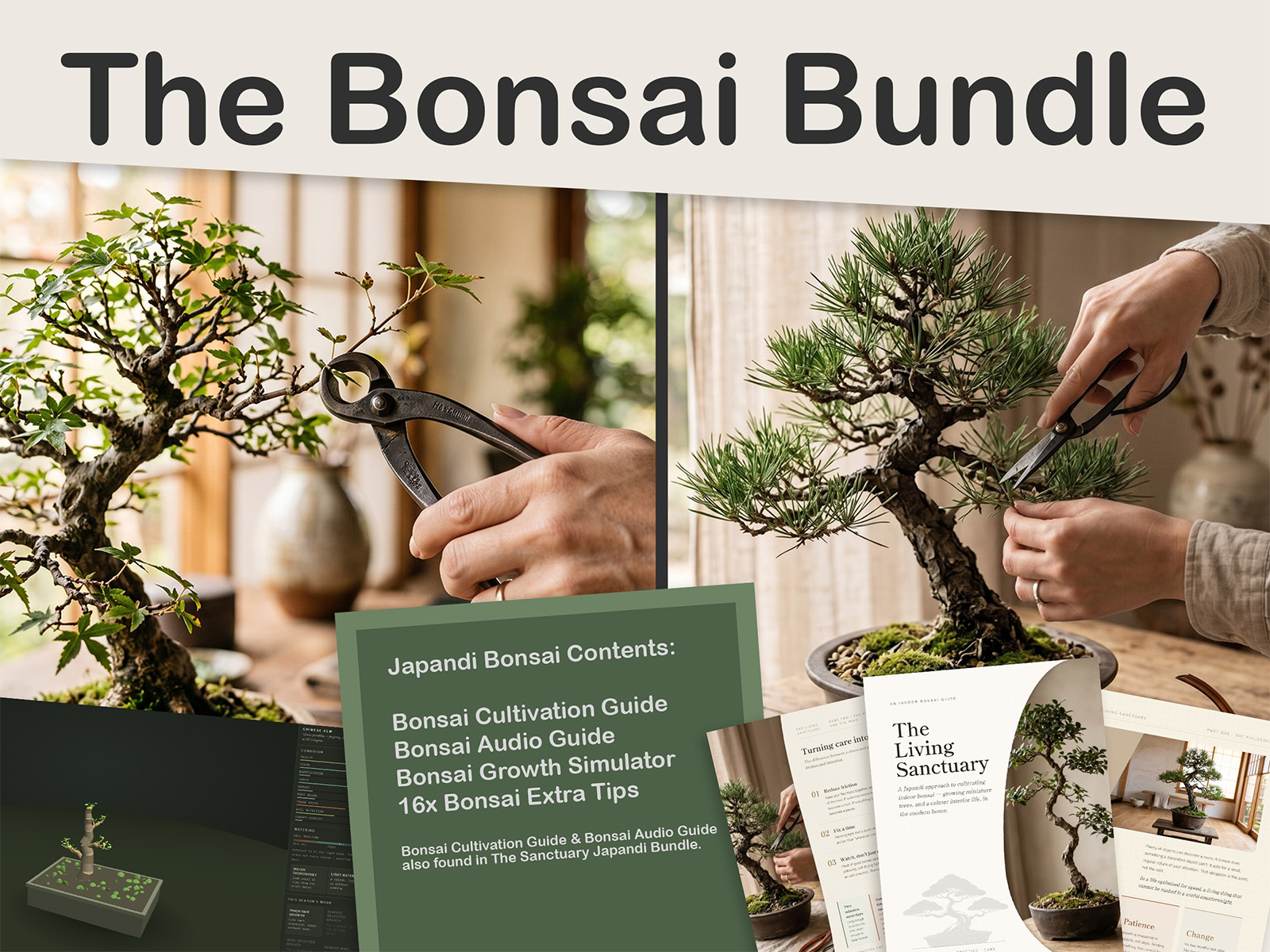
Special Bonsai care, corrected.
A guide, a growth simulator, and sixteen tips for keeping a tree alive – not by accident. Mottainai applied to something that can actually die if you get it wrong.
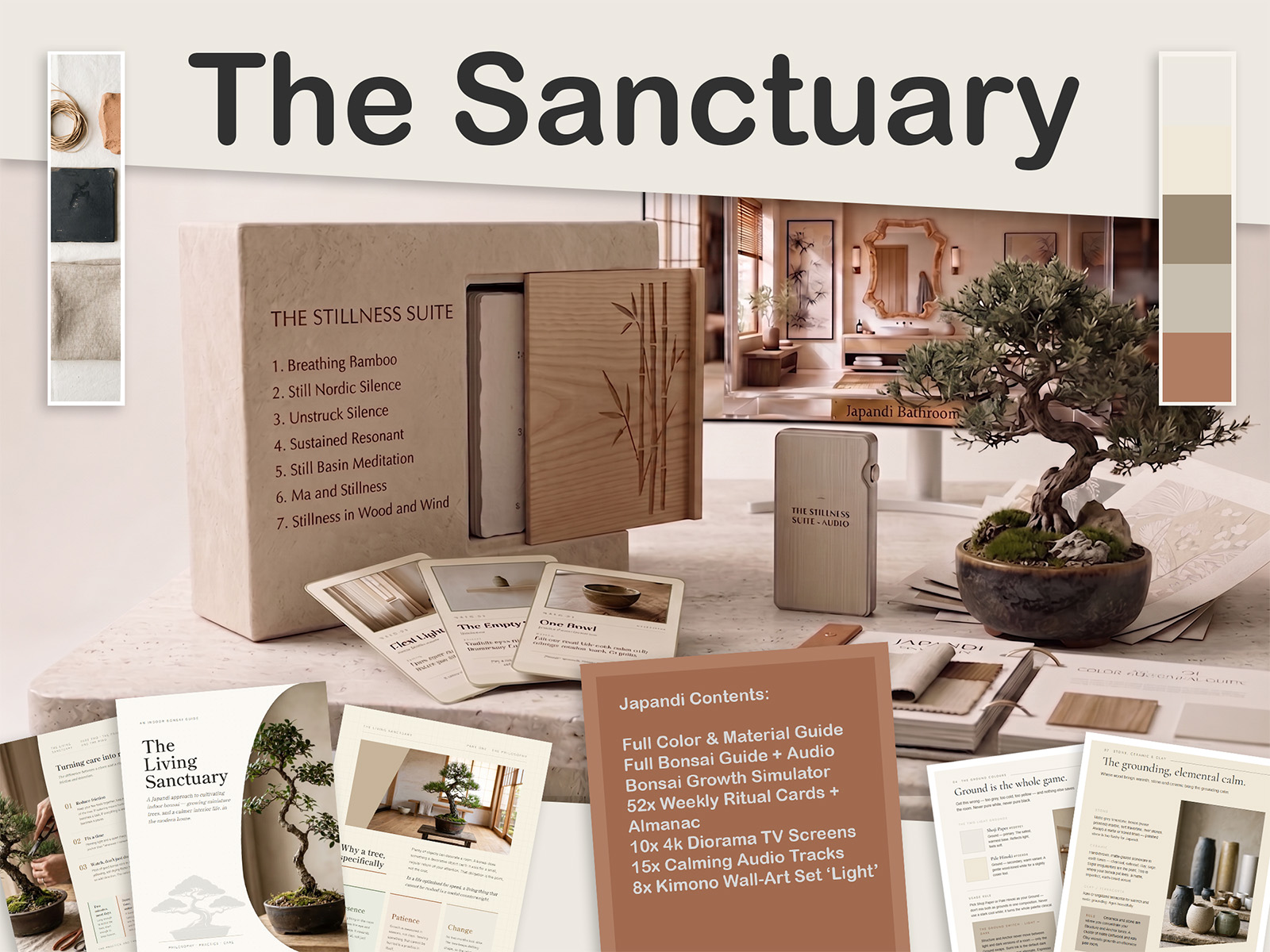
Everything a quiet room needs.
Eight pieces for building a home around wabi-sabi and ma — imperfection kept, empty space respected. Wall art, guides, and two audio companions.
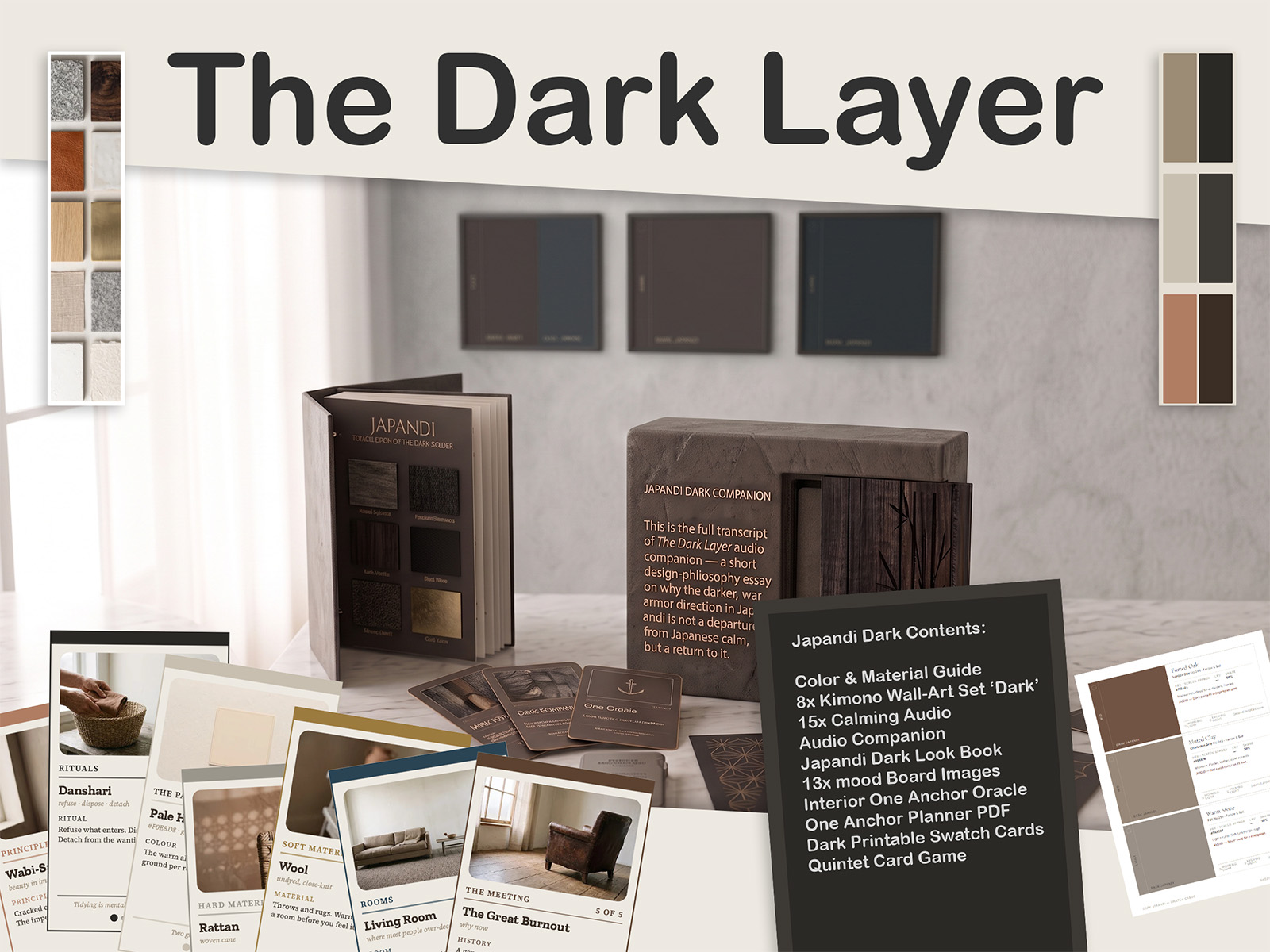
The room after the lights go down.
Nine assets for a home that holds its shape in shadow — one anchor colour, deliberately placed, everything else in ma. Guides, an audio companion, and more.
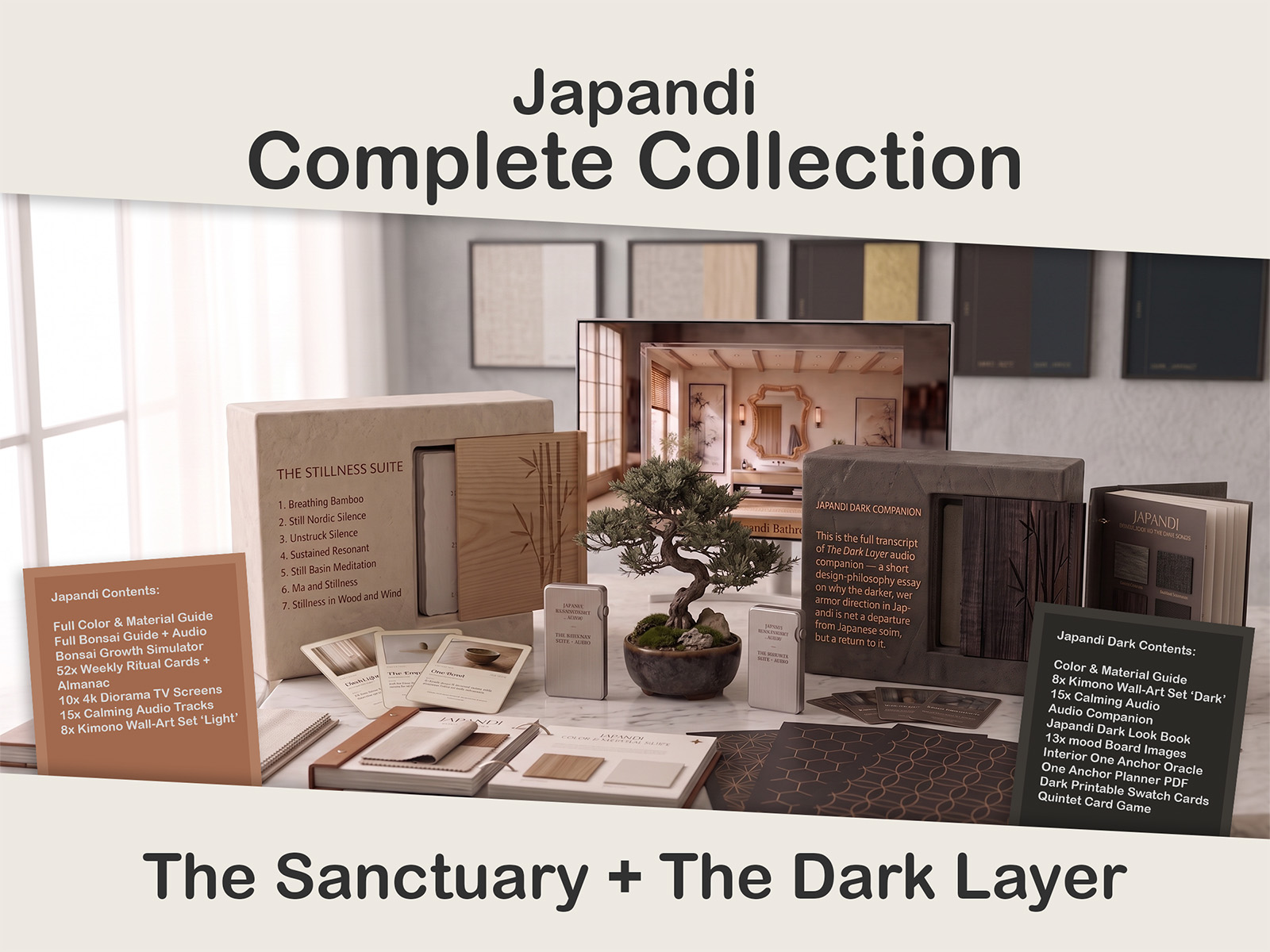
One complete system. Every asset.
The Sanctuary and The Layer, together – All the 17 assets built on the same three constants that never move between them. Driftwood, Wabi Ash, Kiln Clay.
FREE JAPANDI STARTER GUIDE
— Check out the other rooms (kitchen, bathroom & home office) in the free Japandi Starter Guide —